
By Dan Antonelli
Posted on Friday, April 17th, 2026

I continually hear sign people lamenting about how bad the wrap market is in terms of the work being put out on the street. All these wraps, they say, are terrible and are killing the market.
To those, I say, you should rather be rejoicing in the opportunity laid out before you. With the wrap market being a literal race to the bottom, most shops are looking to undercut the other by offering lower and lower print and install pricing. For the consumer, this seems like a great deal. If Sign Shop #1 is priced higher than Sign Shop #2, they’ll typically choose the less expensive option, right?
This is true when both shops are essentially selling the same thing. The consumer already thinks that materials and laminates are the same. And maybe installations are even the same at both shops. And if they are both doing non-creative, dysfunctional and illegible wraps, then by all means, the consumer is going to choose the lowest cost.
But does it have to be that way? Let’s imagine your shop did wrap design work that no one in the area did. What might happen to the mindset of the consumer? Do they really have a choice if they simply can’t get the type of work you are doing at another shop?
If they are seeking our agency out to design truck wraps, they must not have much choice in who to hire—we’re not even local to most of our clients. They must feel like there’s no local alternative to get a good wrap done, so they are using us for design only, and having a local shop install the wrap.
Certainly, in our case, the prevalence of bad wrap design has been a huge boon to our business. As the wrap market matures, so does the buying public. They’ve done the tribal flames, carbon fiber and pink wraps. Many are realizing that those approaches don’t help them build a brand for their business or deliver a good ROI.
If your shop was able to produce something no one else could, couldn’t you also charge a premium for that service? That “something” is good design.
Barriers to selling good design
Sign people often tell me that they can’t sell good design work to their customers. Often, the reason why they can’t lies within. And it’s not something they want to hear, because it’s much easier to blame the customer than it is to accept there’s something they might be doing (or not doing) which is causing the disconnect. Here are a few common reasons why shops have trouble selling design:
They don’t look like they can sell design and don’t embrace the concept of branding themselves. Everything starts with a good brand. But if you don’t have a well-designed and well-integrated brand yourself, you’ll be hard pressed to convince a customer that their brand is important.
They don’t market design as a separate component. Too often, design is the afterthought. Sometimes, it’s not even treated as a different charge than the wrap itself. They don’t do a good enough job of educating the customer on why the design is so important. So much time has to be invested in educating a customer on the importance of a brand. You have to leverage case studies and provide examples of other companies you’ve branded to help them understand why it’s so important.
They look like a sign company. This is tough. You are a sign company. But most small businesses don’t respect the ability of sign makers. It’s a negative stereotype for sure, because there are so many talented sign designers. But the mere notion of getting brand advice from a sign company is something many small businesses are leery of. Right or wrong, add the word Design or Agency to the name, and suddenly, the perception of what you do changes.
Simple steps to selling more design
The shift from selling design work won’t happen overnight, but here are several things to consider as you advocate a more design-centric approach.
It’s all about the brand. Start within and make sure you have the right foundation that communicates how an effective brand is so important for a small business—especially on their wrap.
Integrate your brand universally, across the board. Make sure that no matter where a customer interacts with your brand, it is consistent. Everything from uniforms and signage to social media and business cards should be consistent with the brand design.
Make investments in your own marketing. It’s tough to sell the importance of marketing if you cut corners on your own and don’t invest heavily in it. Our current website has over 1000 man hours on it. A huge investment, but one that has paid significant dividends.
Invest in how your work is presented
The work you do is just as important as how you present the work you’ve done. That terrible photo of the completed truck wrap taken in your parking lot on a rainy day looks really bad. Take the time to make them look good, or create them, like we do, in Photoshop. Use case studies to illustrate how the design work you’ve done has been integrated on many different mediums.
So embrace those poor wraps you see out on the road! They represent an opportunity to really distinguish your shop and get more money for great design.
This appeared in the January/February 2016 issue of SignCraft.
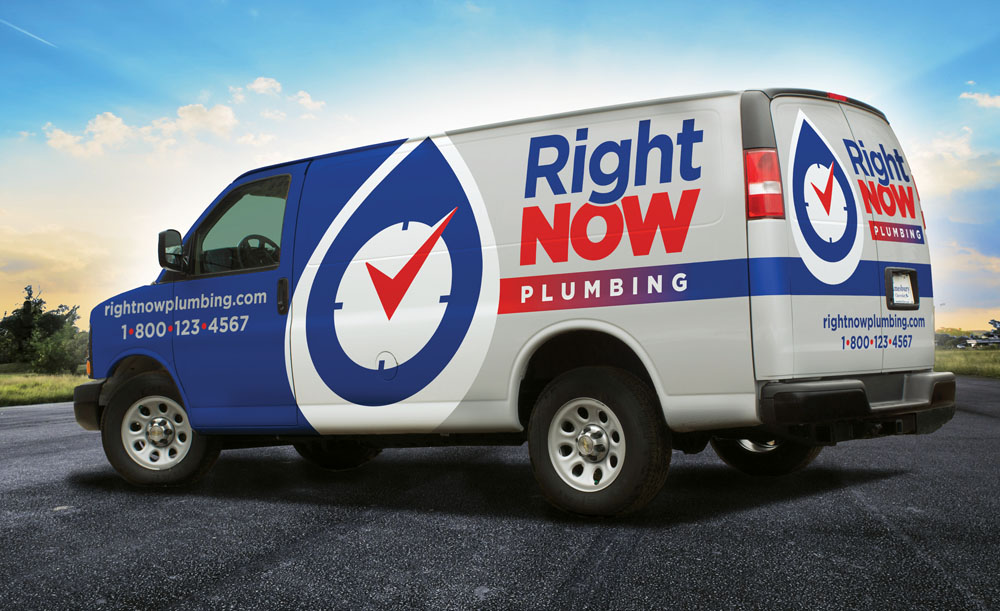
Simple, easy to read graphics and a bold color scheme make the brand stand out, and deliver a positive brand promise. Think about what the design communicates to viewers who know nothing about the company. Does it say they are professional, reputable, and likely to do a good job? Those are the questions every wrap needs to answer.
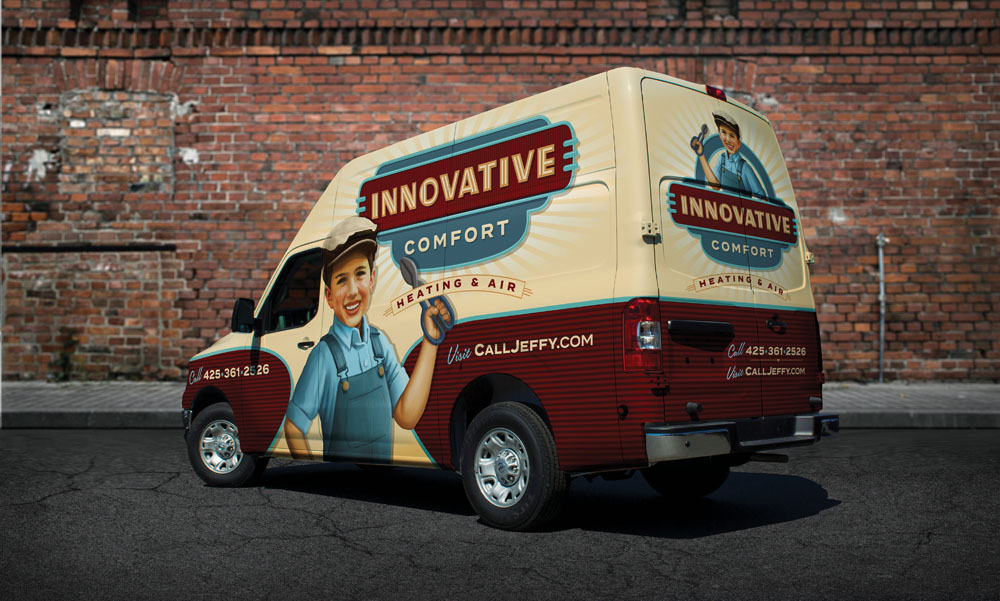
Truck wraps like this are disruptive because they stand out from what is expected for that market. A unique color scheme, interesting illustration and a vintage feel all reinforce a positive brand image. If someone rolls up your driveway in this to give an estimate, what type of service are you expecting?
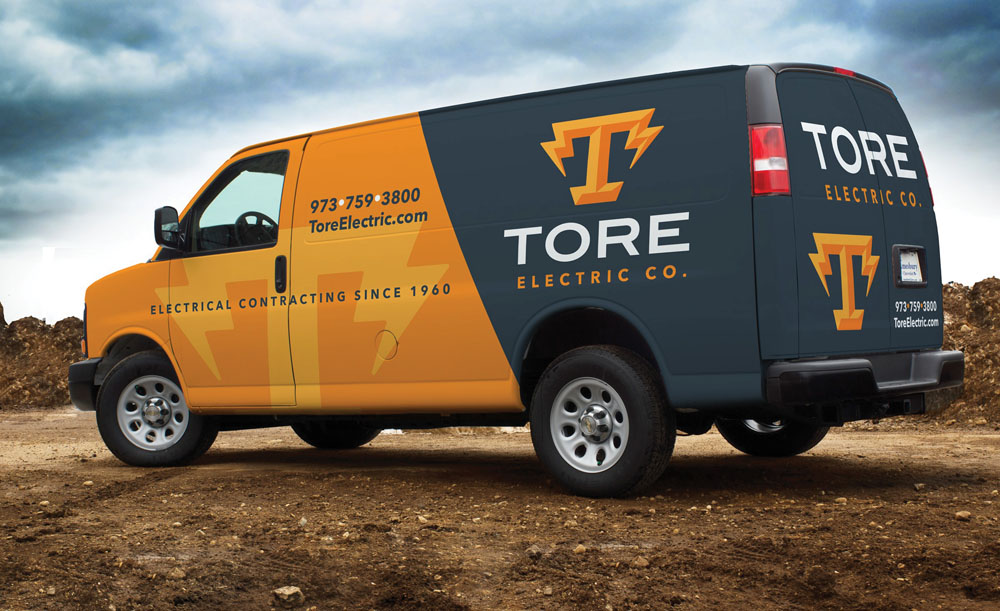
Here’s an electrician truck wrap that doesn’t look like every other electrician’s truck wrap. Once again, disrupt the space the brand lives in and what’s expected, then do something unique. The concept of lightning bolts isn’t unique but the execution of it here is. Note, too, that the colors are different and don’t blend in the way many other color schemes typically do.
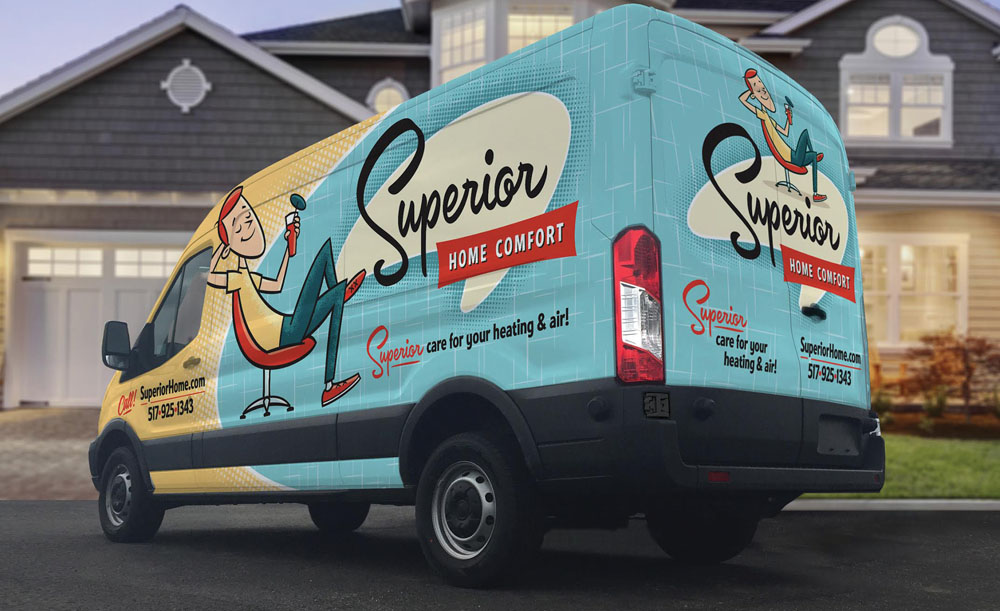
Great colors, and an interesting concept to go with a good name, make this a great example of building brands that stand out and don’t fit in. As a homeowner, I want to be that guy. All relaxed and chilling out while this company is fixing my problem. We also wrote the tagline for this company to reinforce the nature of the business.

Dan Antonelli owns KickCharge Creative (formerly Graphic D-Signs, Inc.) in Washington, New Jersey. His latest book, Building a Big Small Business Brand, joins his Logo Design for Small Business I and II. He can be reached at dan@kickcharge. com. Dan also offers consulting and business coaching services to sign companies. For more information, visit danantonelli.com. On Instagram: @danantonelli_kickcharge.

