
By signcraft
Posted on Monday, May 18th, 2026

You can learn a lot about fabricating custom signs by hearing how others do it successfully. Peter Poanessa, Keene Signworx, Keene, New Hampshire, has been turning out unique, award-winning custom signs for over 30 years and has a reputation for building them to last.
“We want to turn out signs that not only look good,” he says, “but will last for 15 or 20 years.” That means using high-quality materials with a proven track record of durability. He also counts on fabrication methods that he has used for years with reliable results.
Take a look at three 3D signs that meet these criteria—and are practical for the one- or two-person shop, too. He builds them using basic equipment and outsourcing whenever necessary. If you don’t have welding capabilities, for example, that can easily be outsourced to a metal fabricator. We’re sure you’ll find some production tips in Peter’s approach that will save you time.
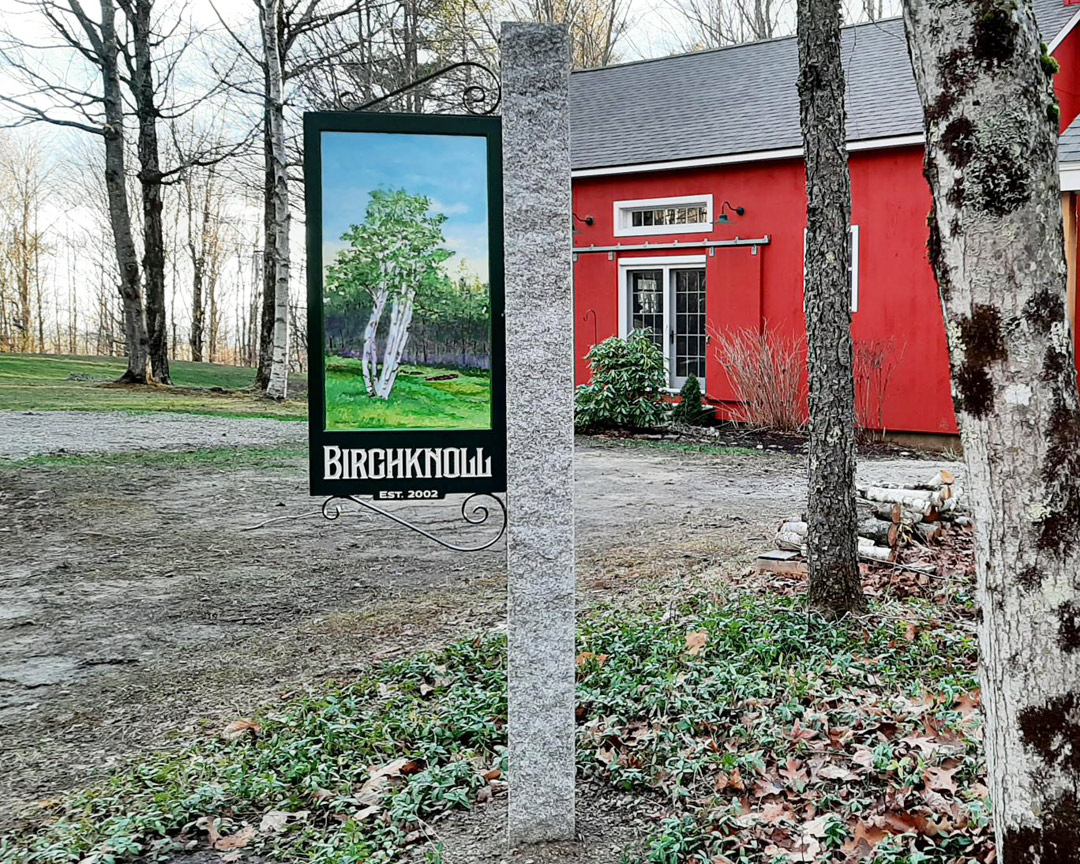
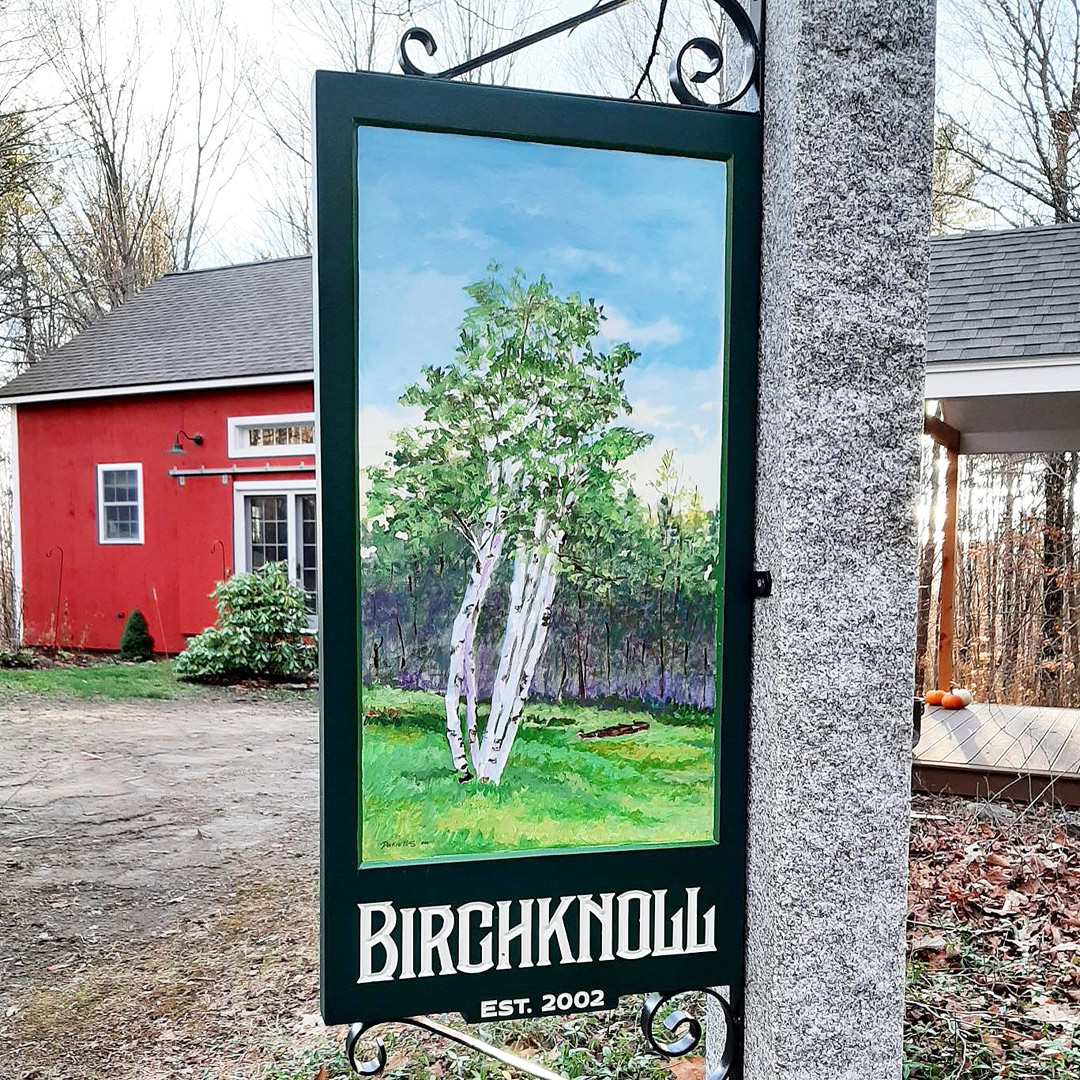
Birchknoll:
“This is a 35-by-17-in. panel of 2-in. 18-lb. SignFoam HDU,” says Peter, “with the inset panel for the illustration recessed about ½-inch, with a beveled edge. The steel bracket goes up one side then extends across the top and the bottom. I make all of my brackets in the shop, which lets us make more unique designs than the standard scroll bracket, but you can outsource that work if you want.
“The sign was finished with Sherwin-Williams Emerald exterior acrylic paint. The bracket was fastened to the edges of the HDU panel with ¼-in. stainless steel lag bolts, 2-in. long. Wrapping the bracket around three sides of the 20-lb. HDU board panel makes a sturdy sign.
“The typeface is LHF Dublin 1 from LetterheadsFonts.com. The illustration was done by Alicia Drakiotes, a local artist. The client wanted a painting of a clump of birches that were in the back yard. I really like her artwork, and I knew she would do a better job than I would, so I asked if she would do it. She did an awesome job.”
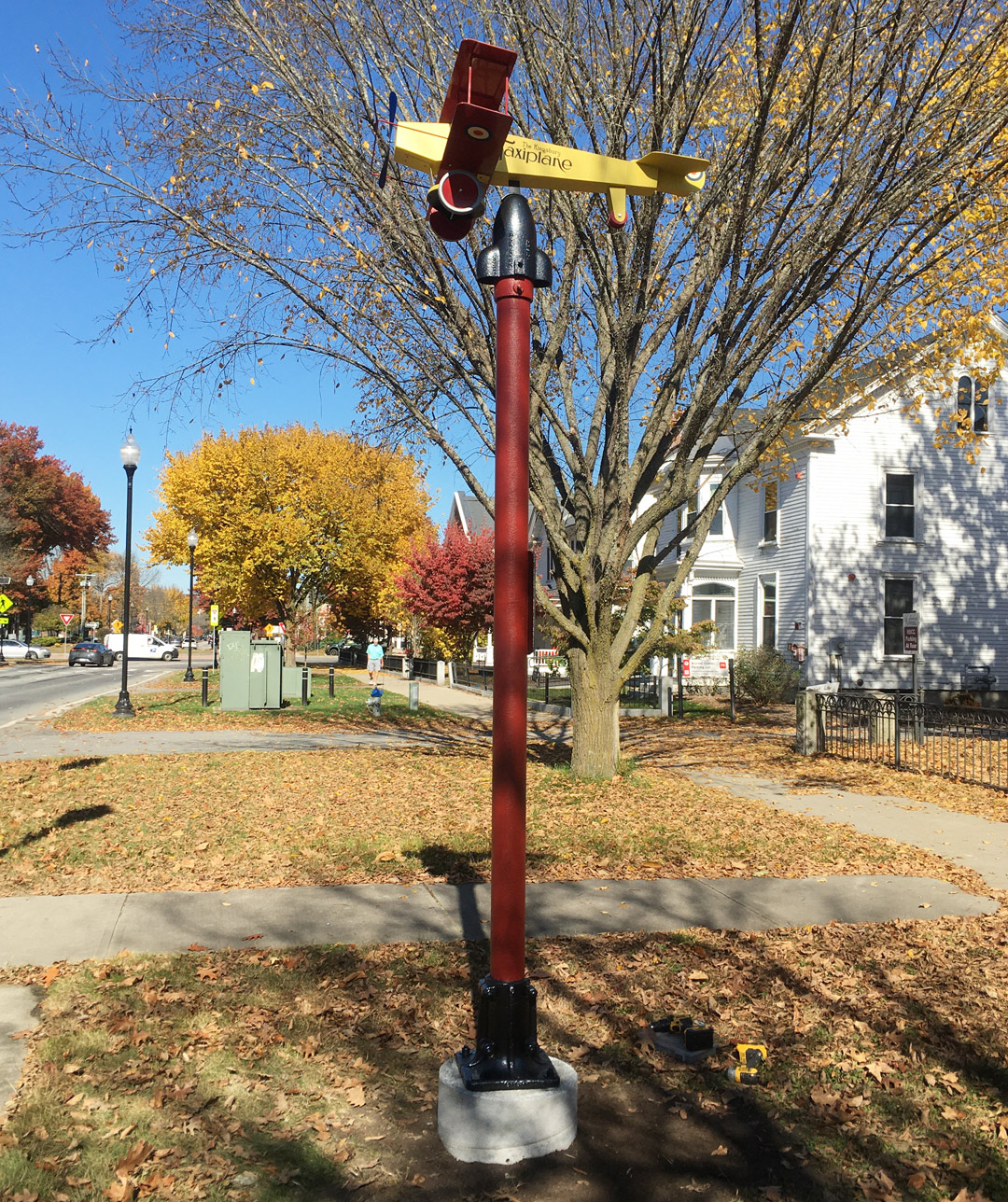
Kingsbury Toy Museum:
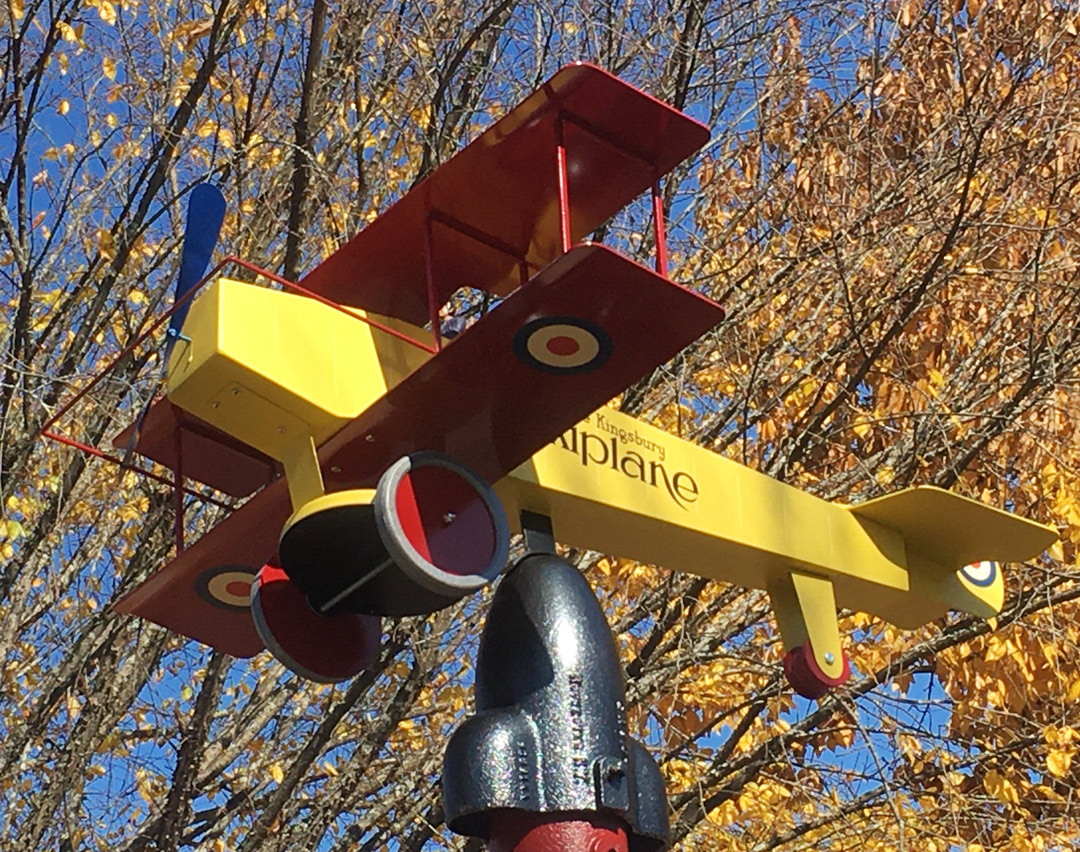
“The Kingsbury Toy Company made very high quality stamped metal toys in Keene up through World War II—cars, trucks, trains, airplanes. Today they are very collectible. This is a piece of public art for The Kingsbury Toy Museum that also helps guide visitors to the museum.
“The museum is on Main Street in a big old Victorian home that is crowded in among other similar homes. The visibility of their signage was a problem because the buildings are set quite a ways off the street, which has parallel parking.
“The sign code requires the signs be set back beyond the 25-ft. city-owned greenspace between the street and the sidewalk, then 25-ft. back from the sidewalk. So if you are going to the museum for the first time, it’s very easy to miss the driveway.
“No signage is permitted in that city-owned greenspace. A friend of mine who is on the museum’s board came up with the idea of creating a piece of public art that was a large-scale model of one of the classic Kingsbury toys. It would go on that city-owned lawn and also serve as a landmark for people trying to find the museum. We had to submit the concept to the city, as they have a process to accept a donation of public art.
“Our concept was accepted by the city. The museum gave me the choice of replicating a car, truck, train or airplane. I don’t do 3D modeling , so the airplane looked the simplest to fabricate in my shop.
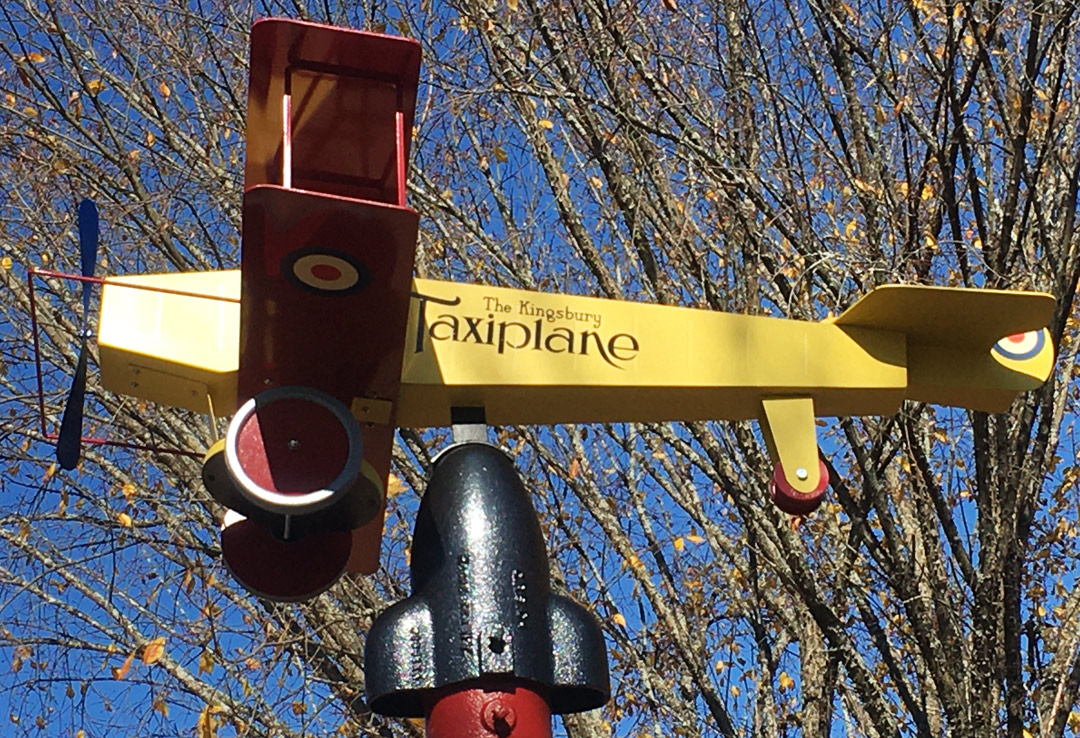
“They loaned me a plane that was about 18-in. long to use as a model. My version is 4-ft. long and it’s made from typical sign making materials. The body is made of laminated SignFoam HDU board. The black blade coming out of the bottom is a bracket made of steel that fits in a pocket inside the body and runs the length of the body. The wings and tail fins are 3mm ACM; the wheels are PVC board.
“The brackets holding the wheels are .050 aluminum. The rods holding the wings together are aluminum, bonded with Lord Adhesive 40619. The red paint is automotive paint, and the yellow is 100% acrylic. The graphics were printed on our digital printer.
“The propeller spins in the wind, which adds some nice motion to the piece. You can’t see it in the photo, but there’s a pilot in it as the original model had.
“It sits on a 160-year-old telegraph post that I harvested years ago from a long-defunct rail line that once ran through Keene. The top ornament originally held the telegraph wires. I’ve had the post for years, waiting for the right opportunity to use it. This seemed like the perfect job for it.
“It’s hard to miss yet very tasteful. It’s not a commercial sign yet it really identifies the museum. And it was a lot of fun to make!”
Nova Arts:
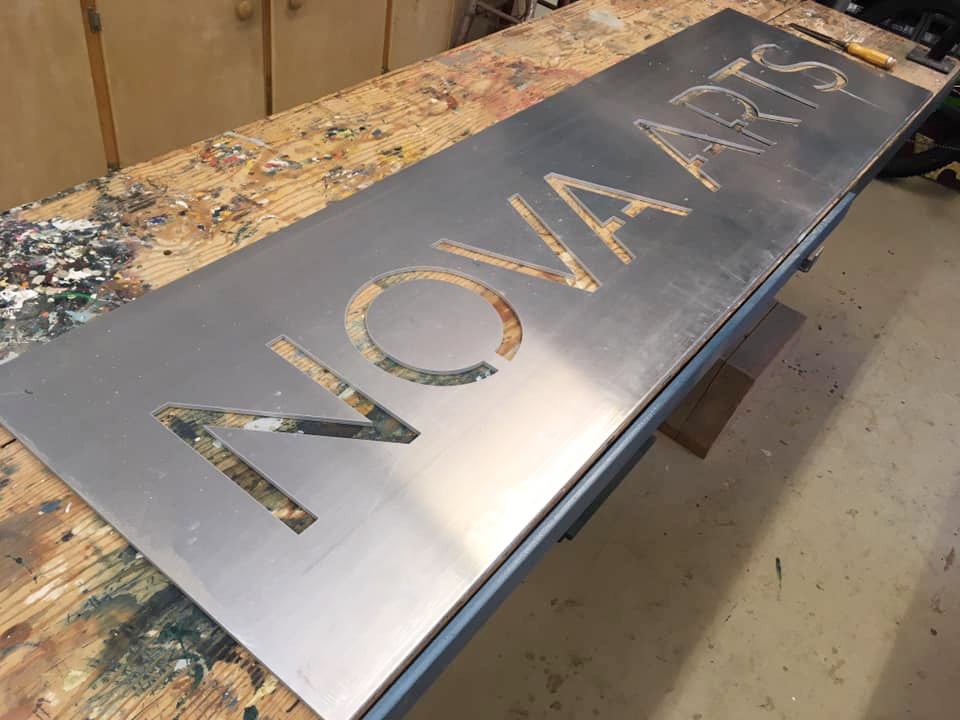
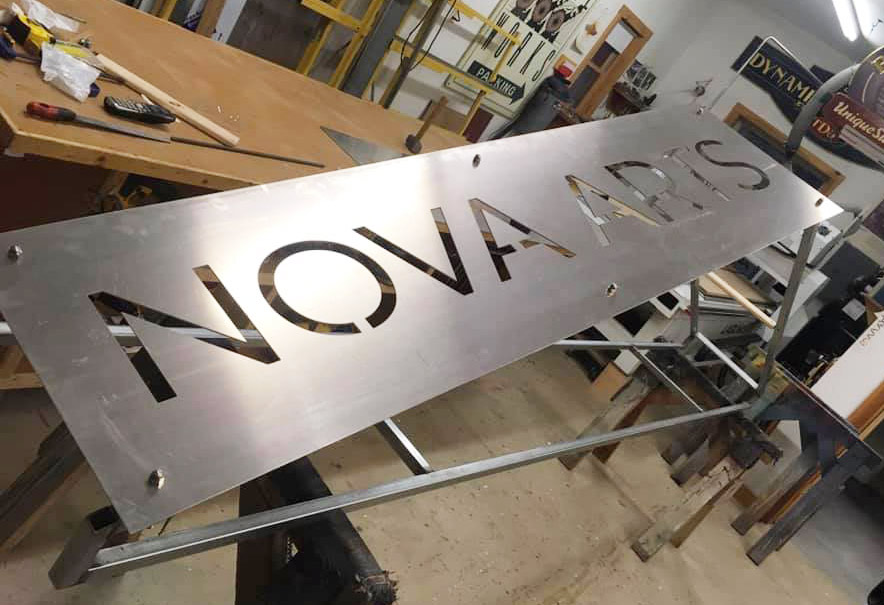
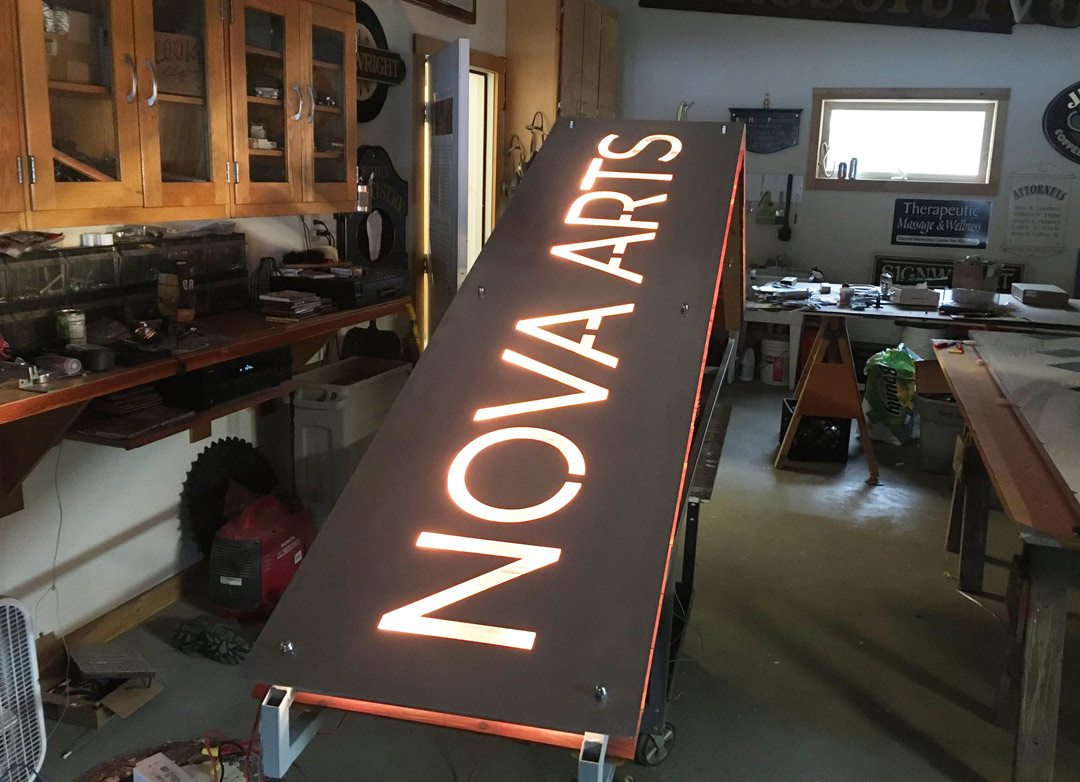
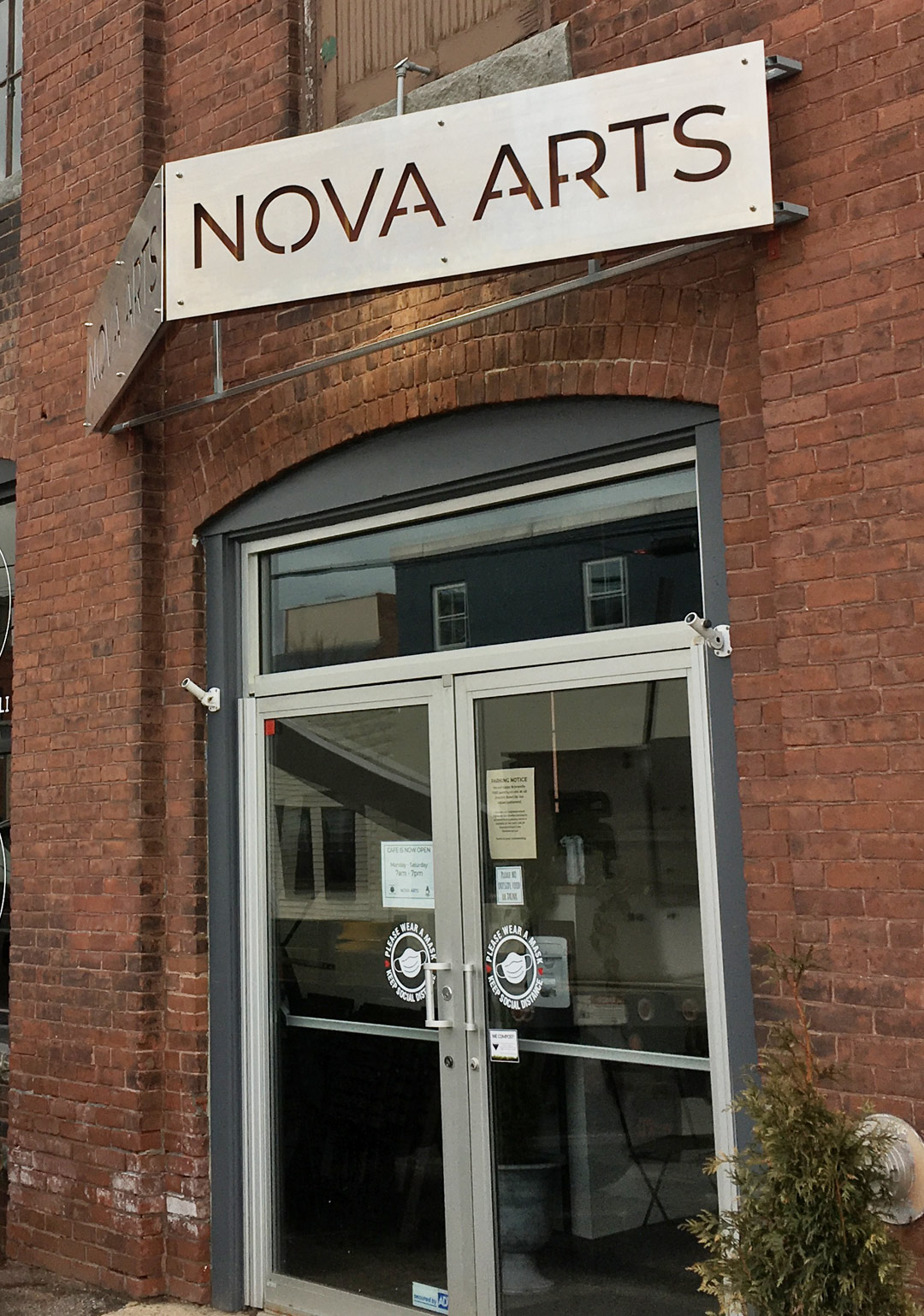
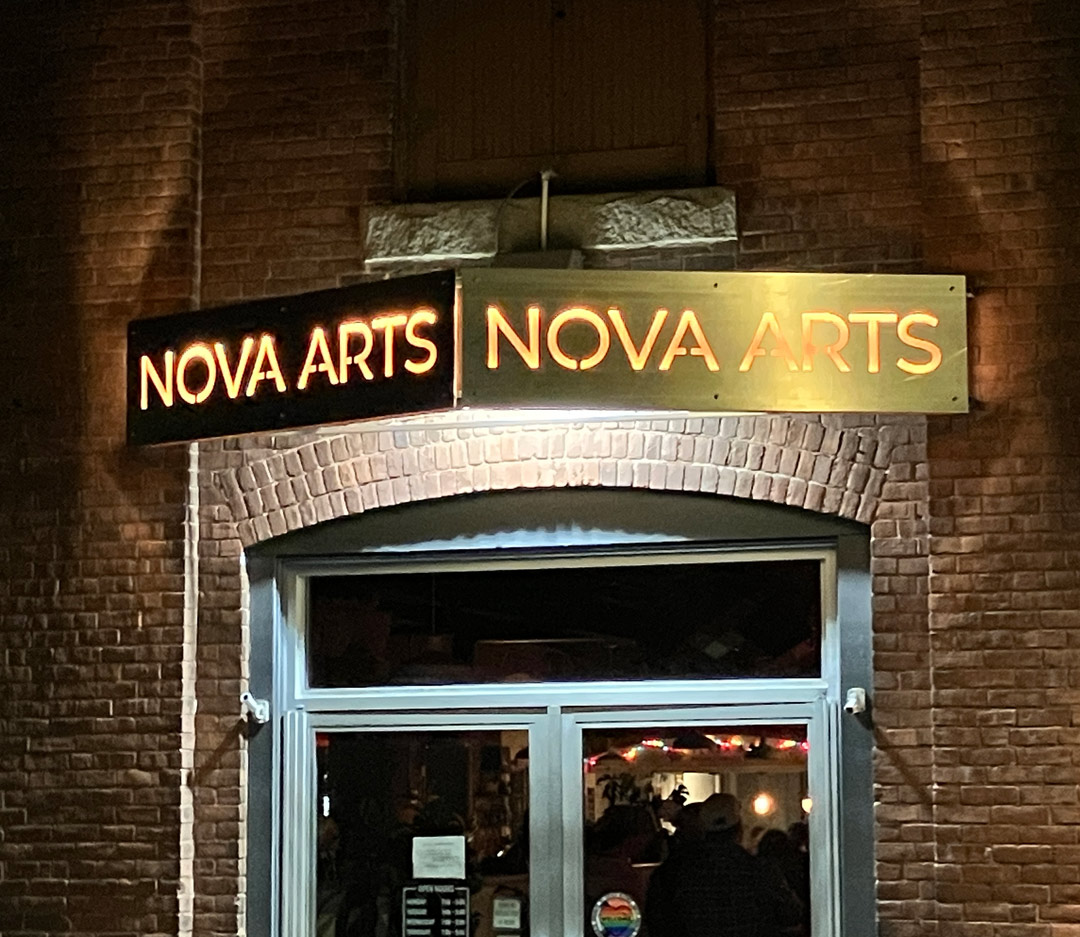
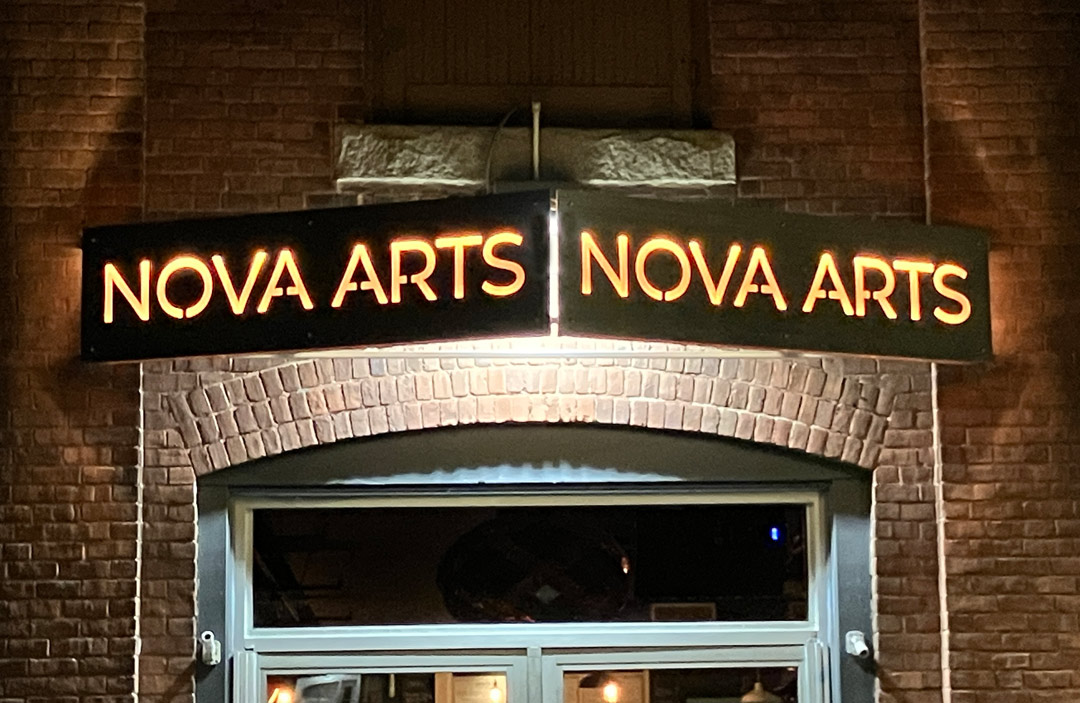
“These CNC-cut 1/8-in. aluminum faces are raised off a cedar panel. During the day, you see the cedar letters, and at night you see the lighted letters. The sign also lights the doorway very nicely, which also draws attention to the sign. We did the design, but the general idea was a suggestion from an architect.
“The aluminum faces are bonded to a welded galvanized steel frame with 3-by-1/4-in. stainless steel lag bolts. We mounted the cedar background 2-in. behind the faces, and installed LEDs to the back of the aluminum faces with 3M VHB tape. It’s all bolted to the wall with 2-by-5/16-in. stainless steel lag bolts and lead lag shields.
“The overall size is 26-by-132-in. and it projects about 37-in. from the brick wall. The cedar is finished with Cetol Marine finish and the aluminum is unfinished.”


