By signcraft
Posted on Monday, July 21st, 2025

Sam Pitino found himself back in the sign business unexpectedly in 2021. He was the creative director at an advertising agency where he had worked for 15 years. The firm was acquired by a PR agency and he was laid off.
The COVID pandemic was still in full swing. He knew there was a renewed interest in hand-lettered signs, though, so he opted for returning to painting signs over returning to the design and advertising industry. We covered how that unfolded in “Sam Pitino: Behind the brush once more”.
“It turned out to be the best thing I ever did,” says Sam, “though I hadn’t planned on ever lettering for a living again. I thought sign painting had been erased as a viable trade. Luckily, I was wrong!”
We featured Sam and his work two years ago, but not for the first time—he was first in SignCraft magazine in 1990 as a creative 22-year-old sign painter/shop owner. As the digital age put more pressure on hand-painted signs, he went to school for digital design agencies and eventually in advertising.
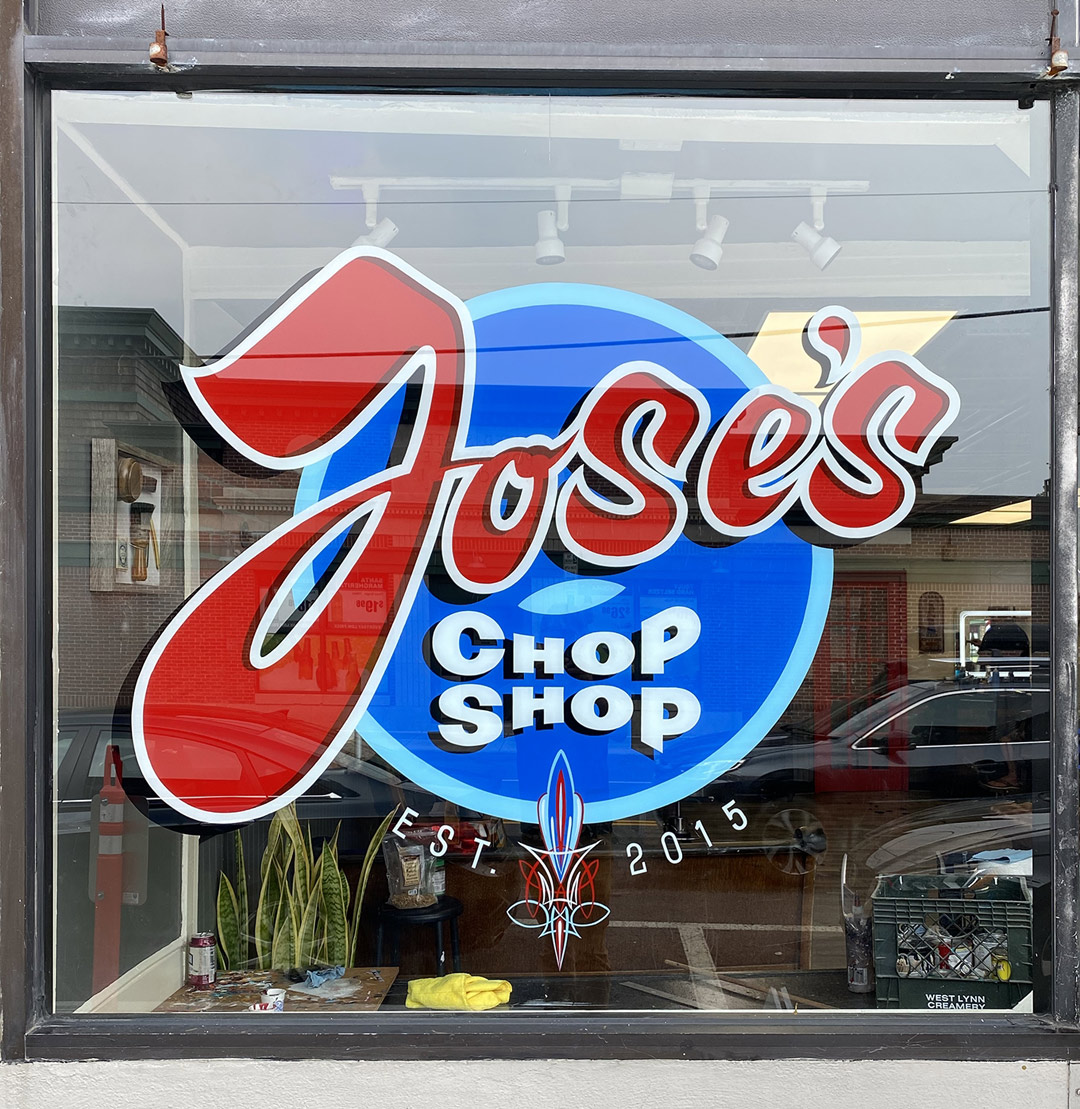
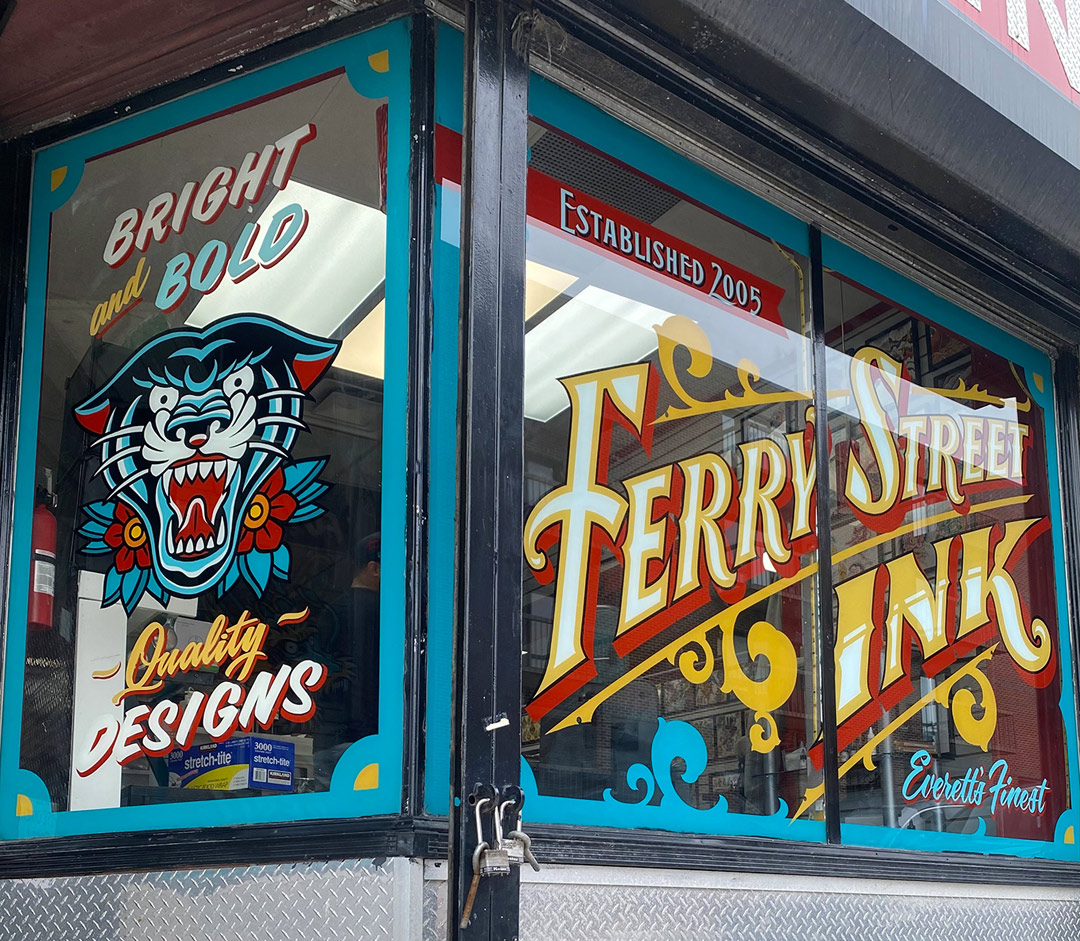
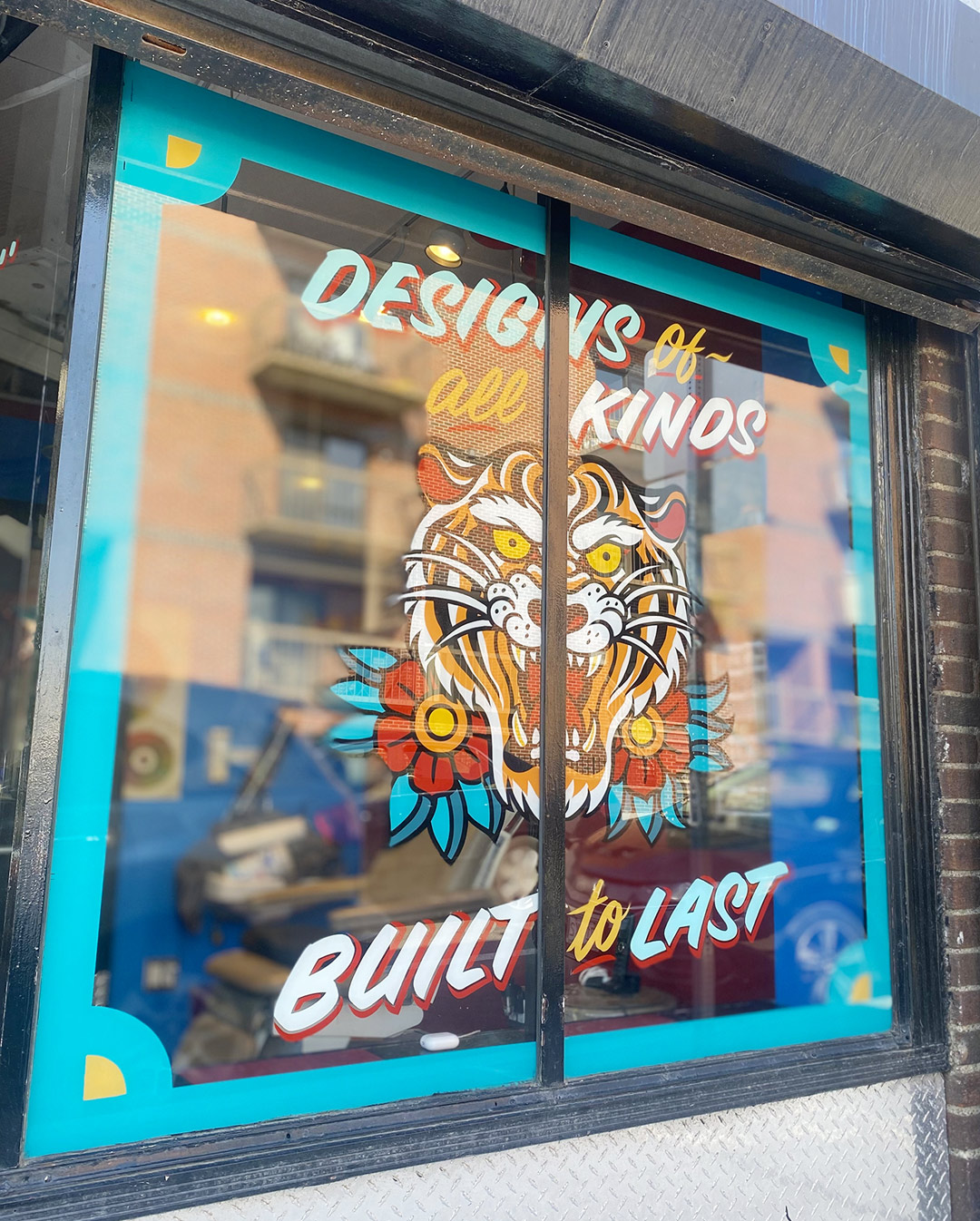
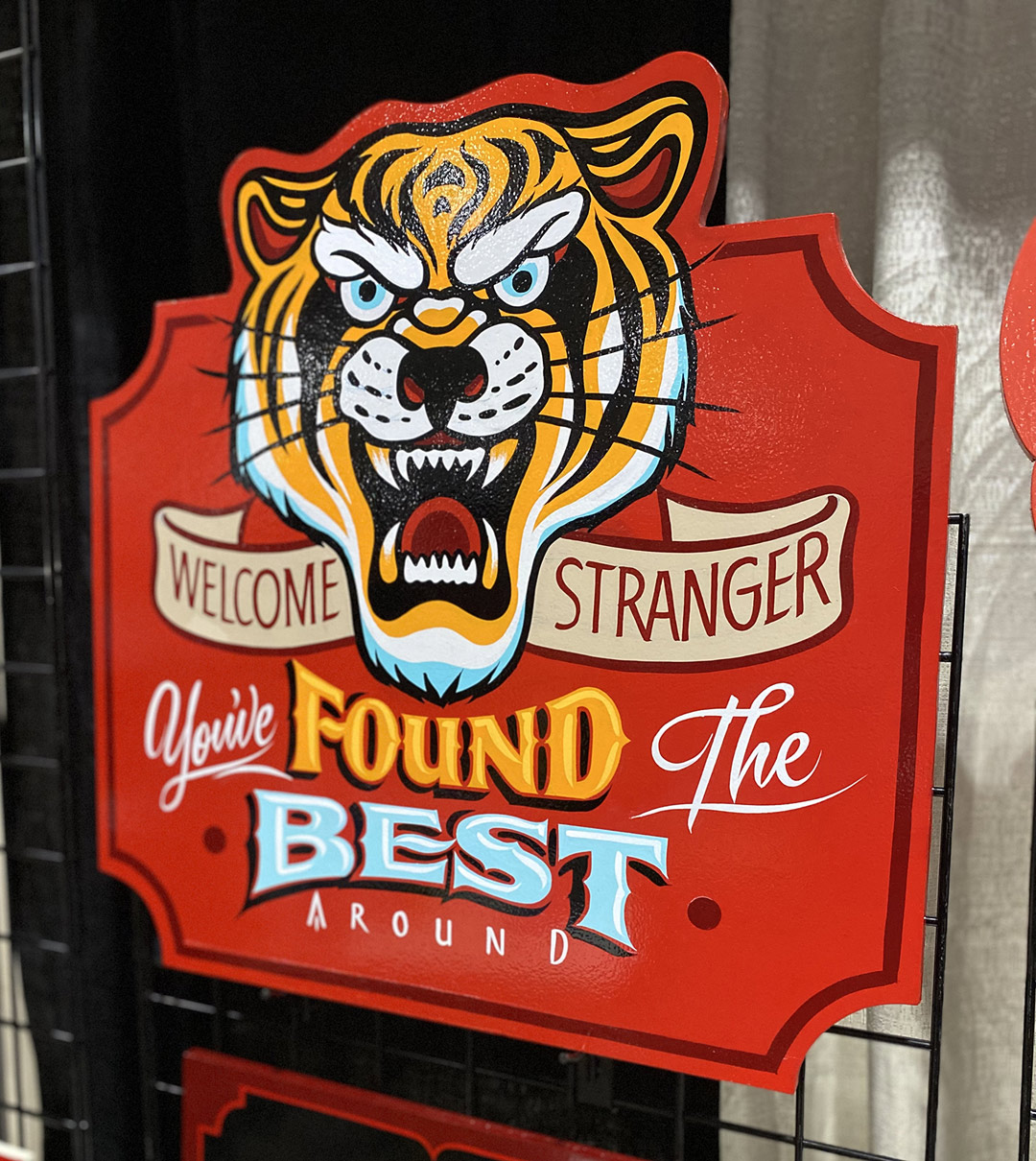
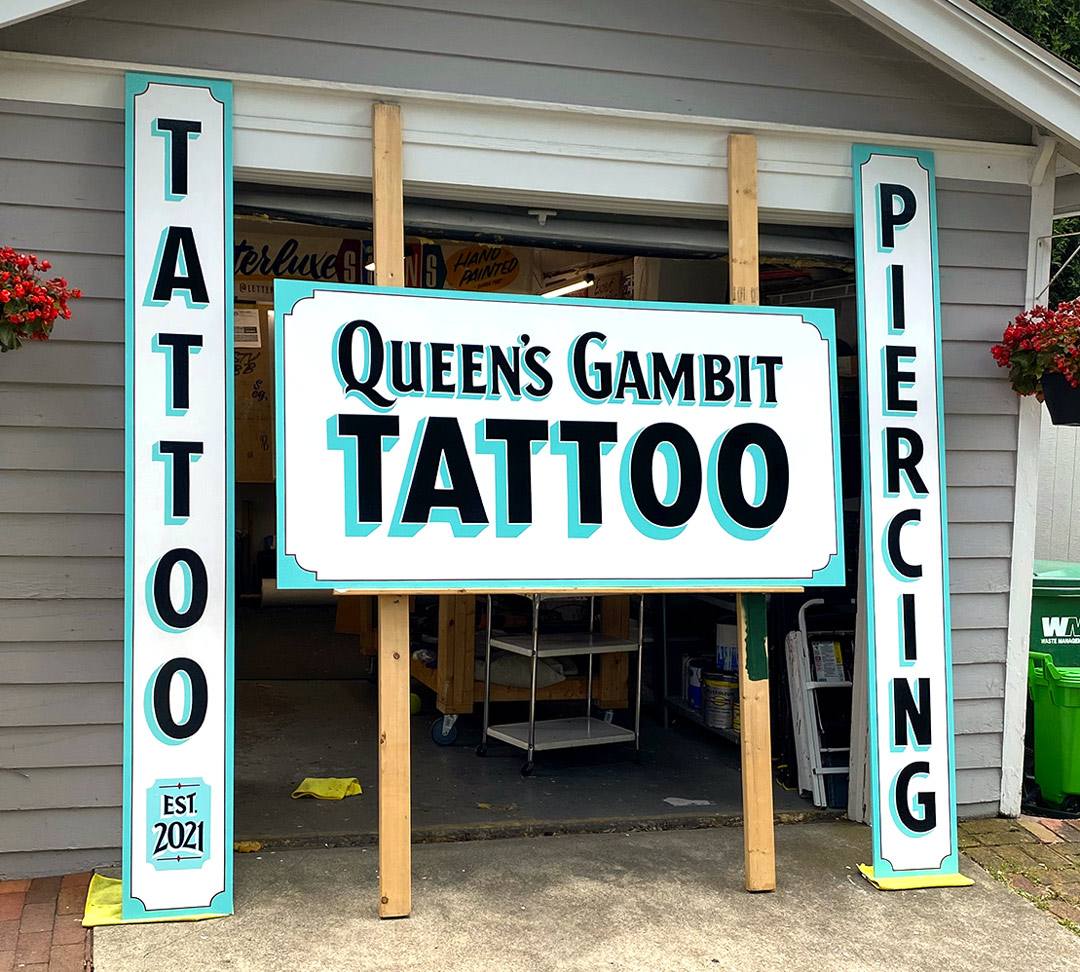
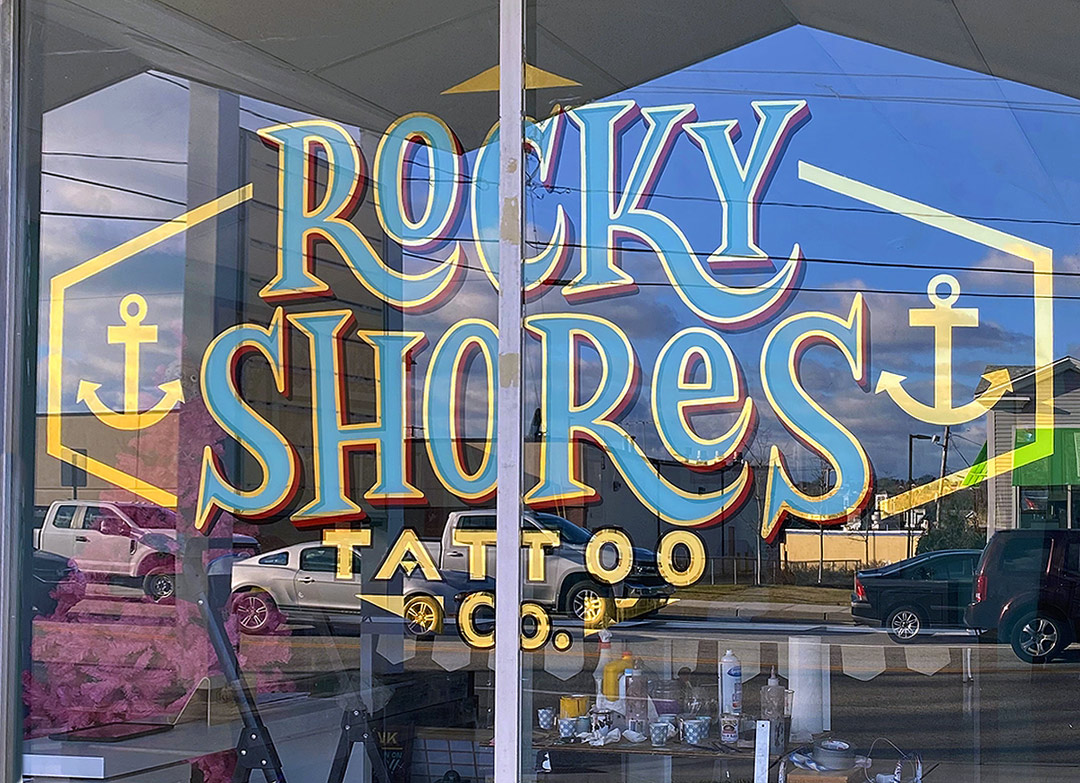
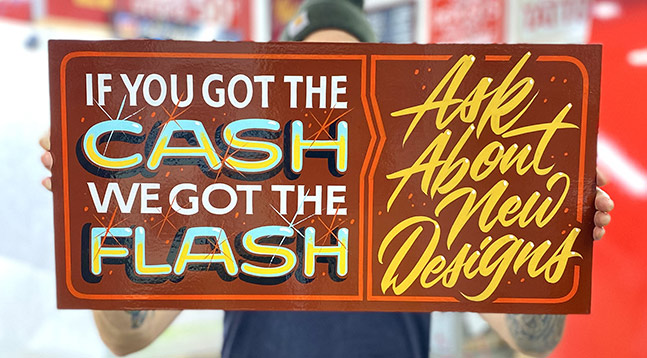
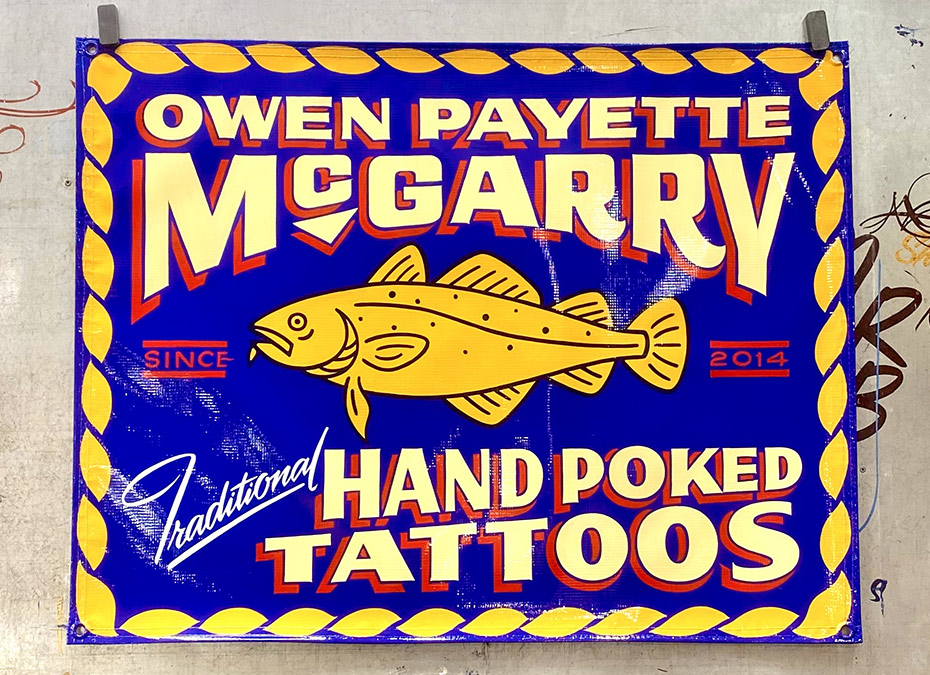
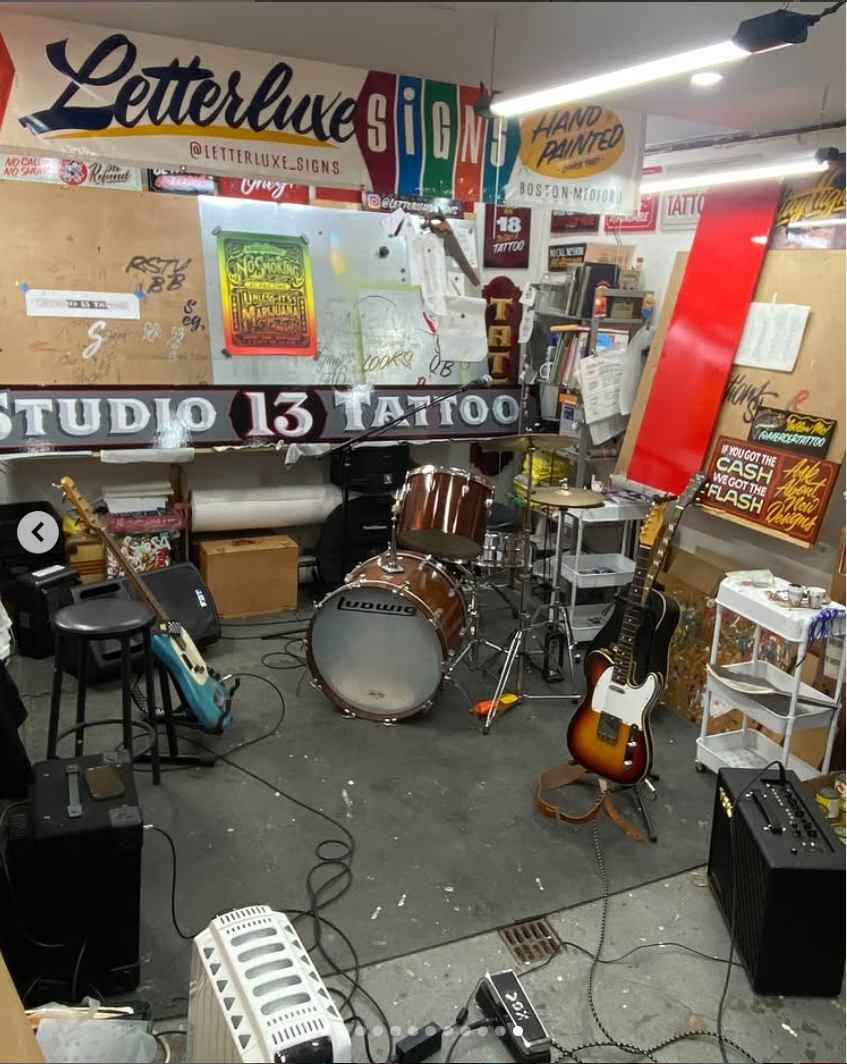
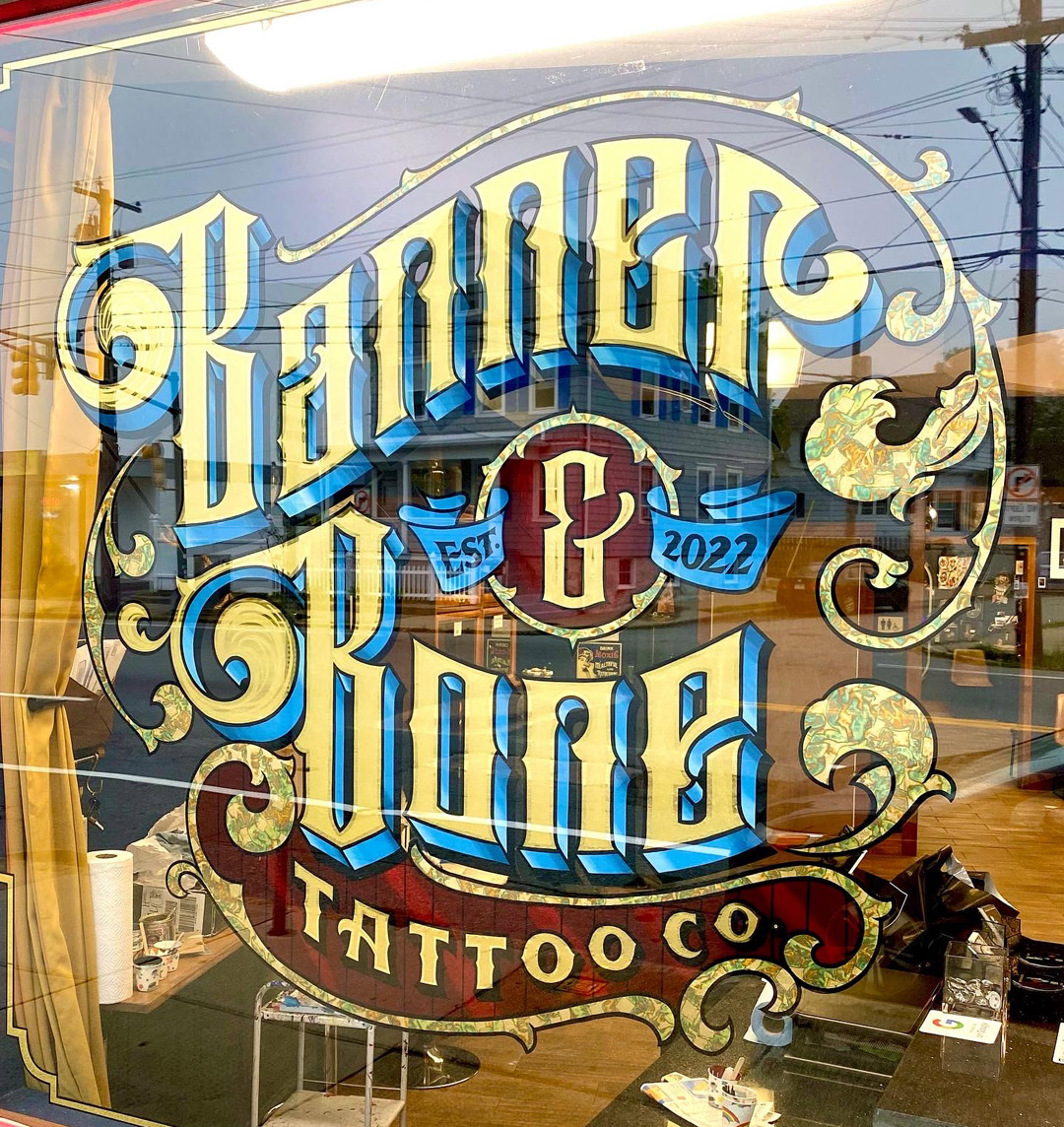
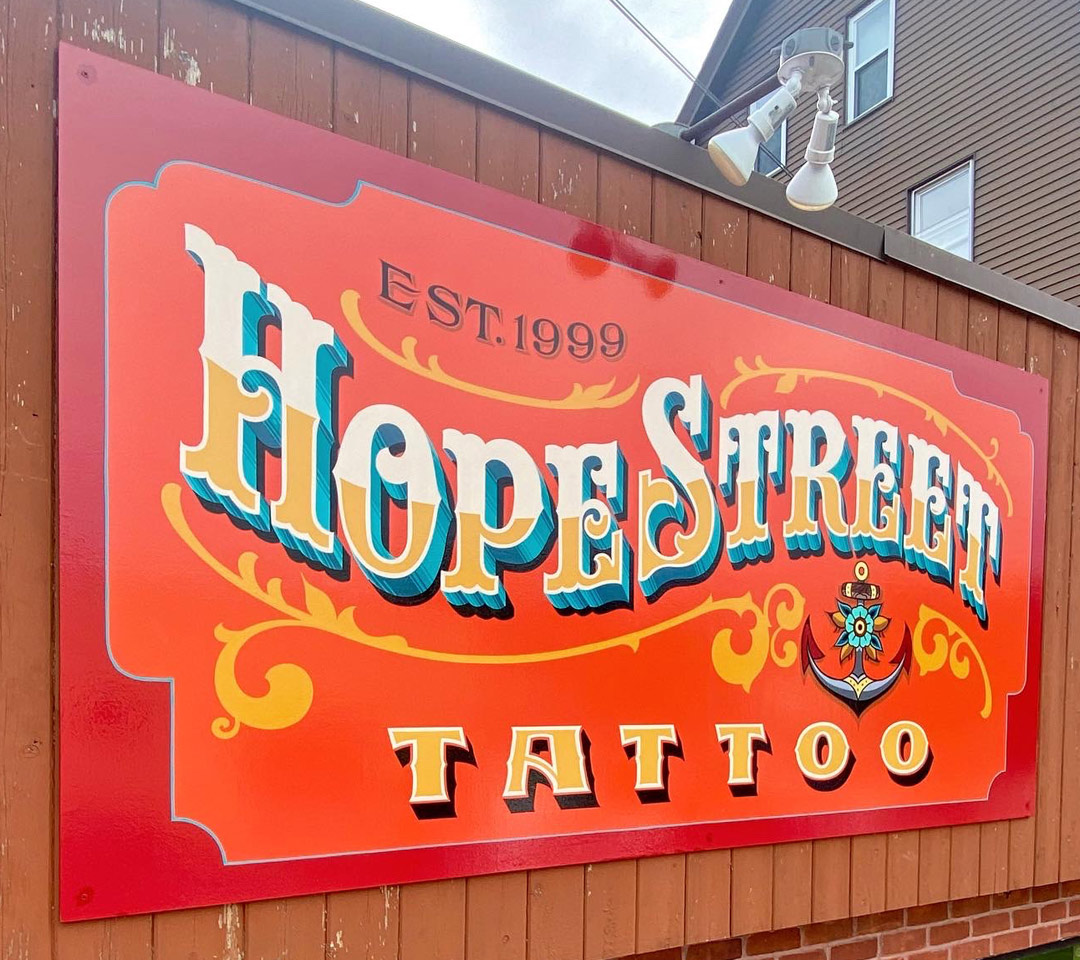
But getting back in the swing of the sign business happened pretty fast. One of his first projects was for a tattoo shop and it got a lot of local attention. Word spread among the tattoo artists, and he also used Instagram to show what he was doing. Letterluxe Signs of Medford, Massachusetts, was born. He’s on Instagram at @letterluxe_signs.
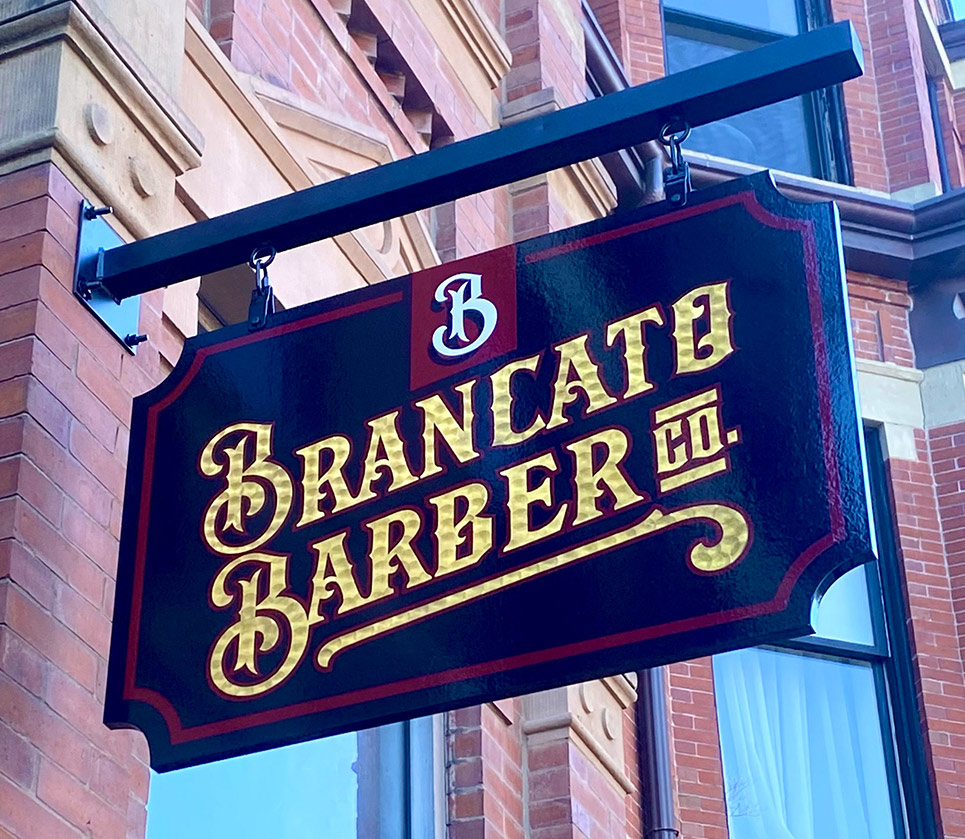
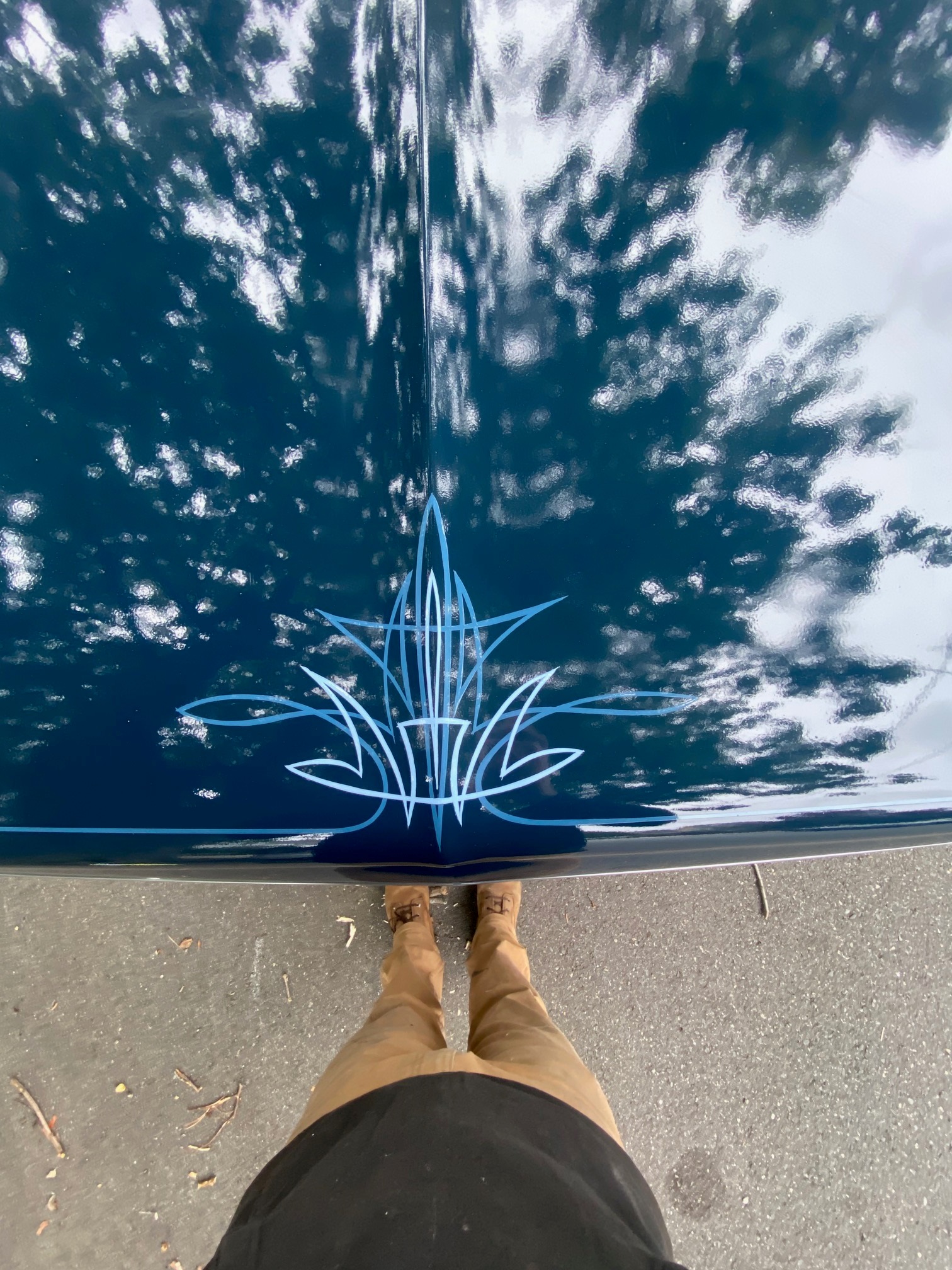
“Things really took off,” he says, “and soon I was doing tattoo shops, barber shops and some other commercial work. I was really surprised to find so much interest in signs painted the traditional way.”
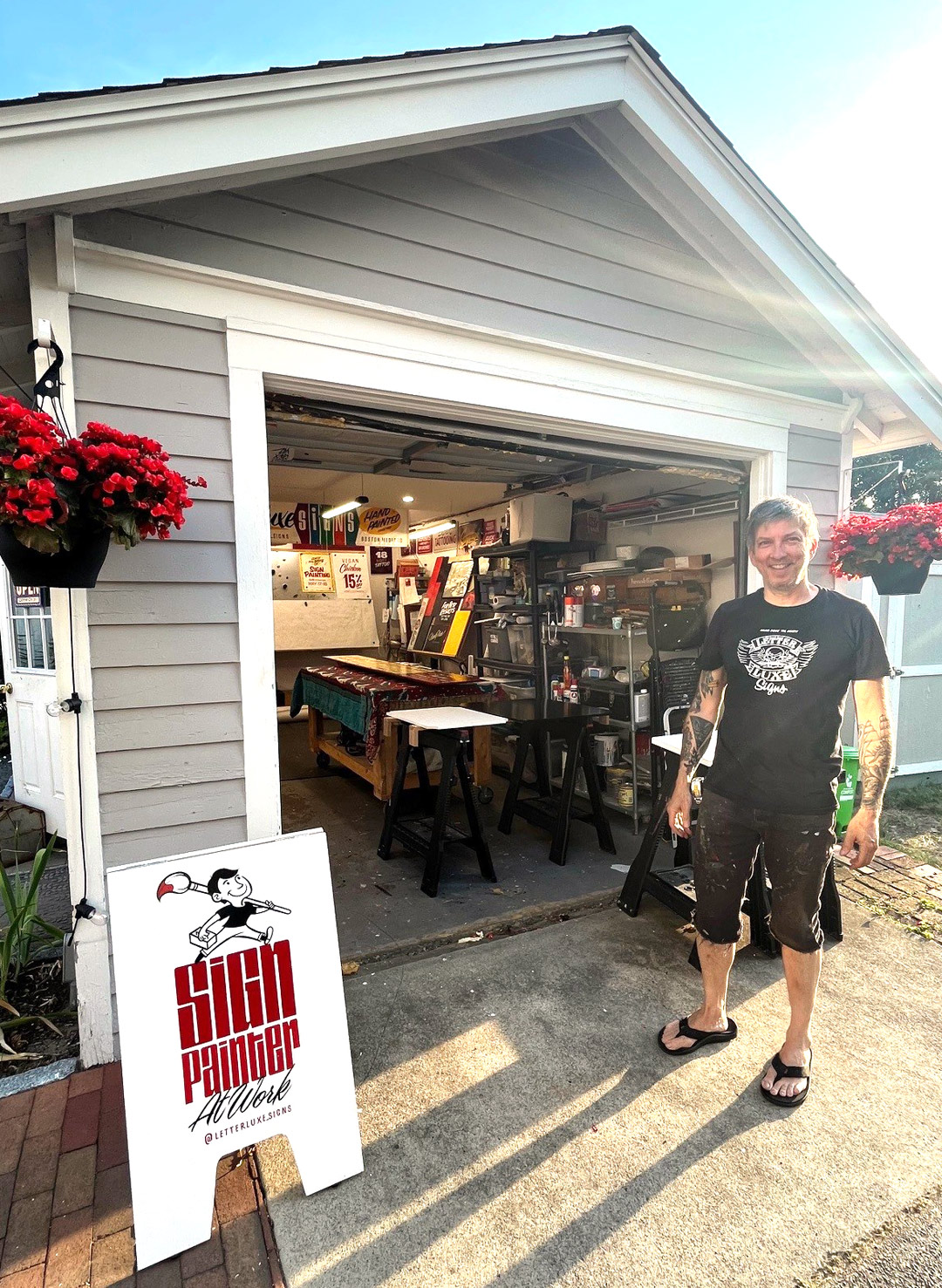
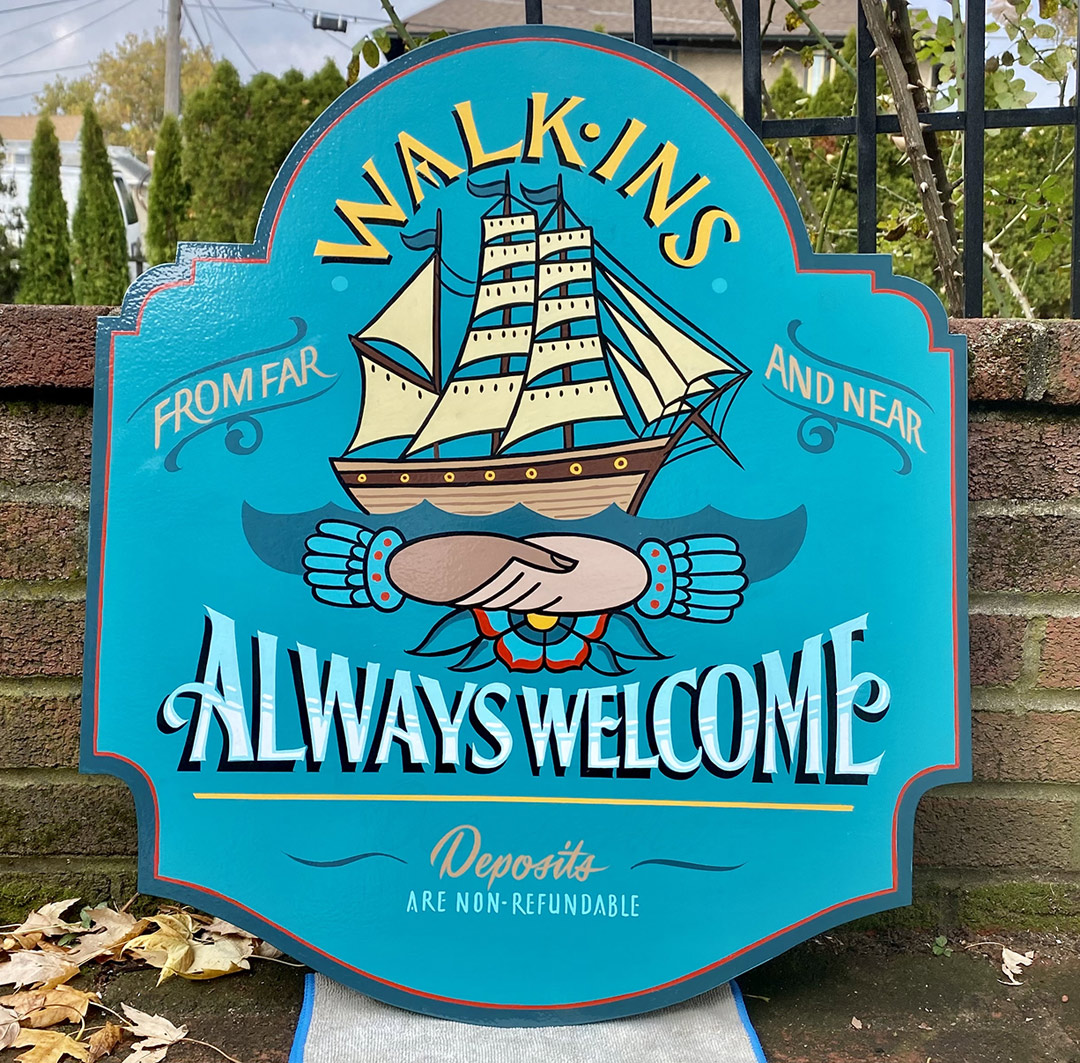
The tattoo market softened during the past year or two, so Sam has been doing a little less of that work. He’s been finding more interest in other businesses that are trying to convey a unique image to their customers.
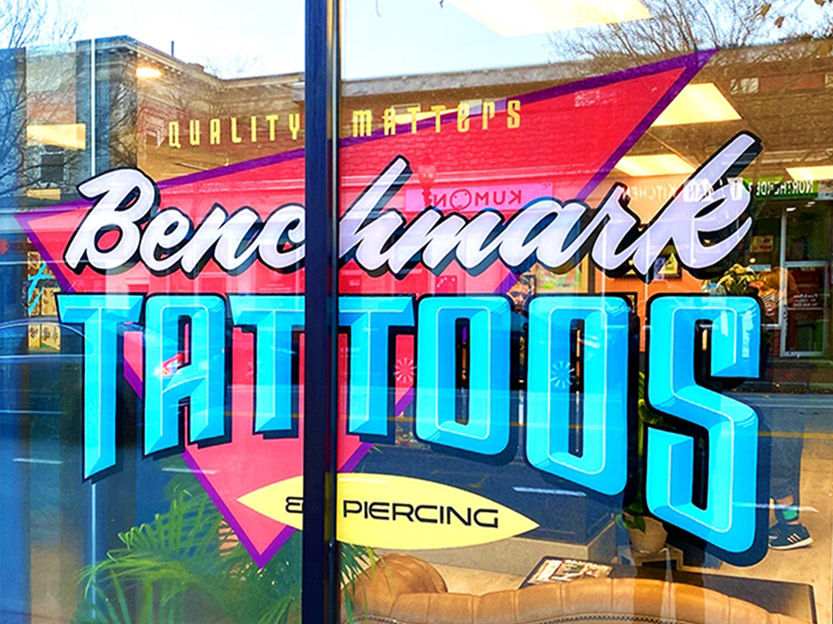
“I think COVID was a factor in the surge of tattoo work,” he says. “People were staying home. With more time to reflect and more expendable cash as well, they got tattoos. The tattoo shops were prospering—and they also wanted cool signs. This kept me really busy.”
Recently, though, more tattoo shops have opened, which means more competition and fewer profits for everyone. Less was being spent on cool signs, so that market fell off a little bit. Sam still has signs for tattoo shops in the shop, though, including some for out-of-state tattoo artists who have seen his work on Instagram. He also has an online store where he sells signs and related things.
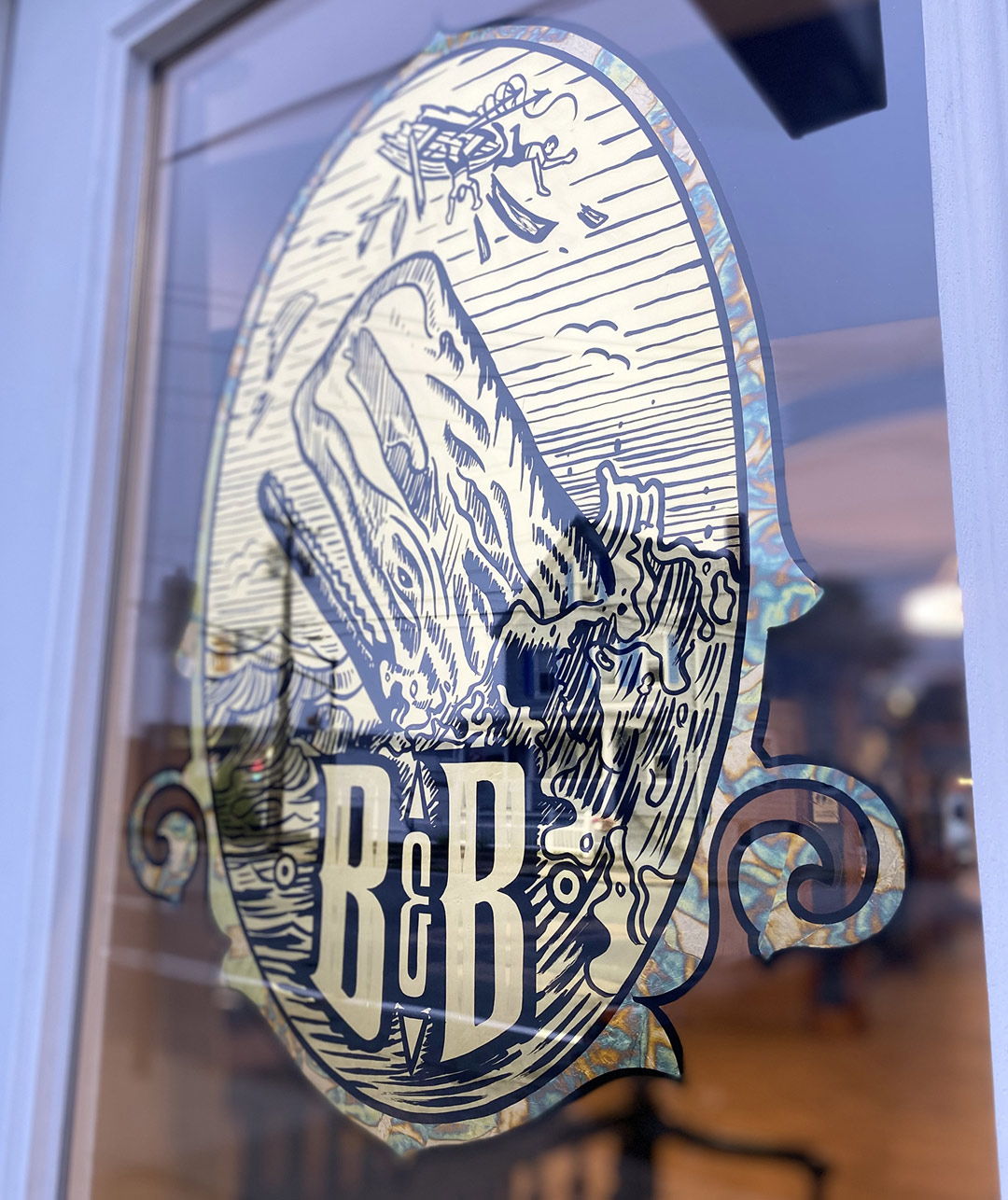
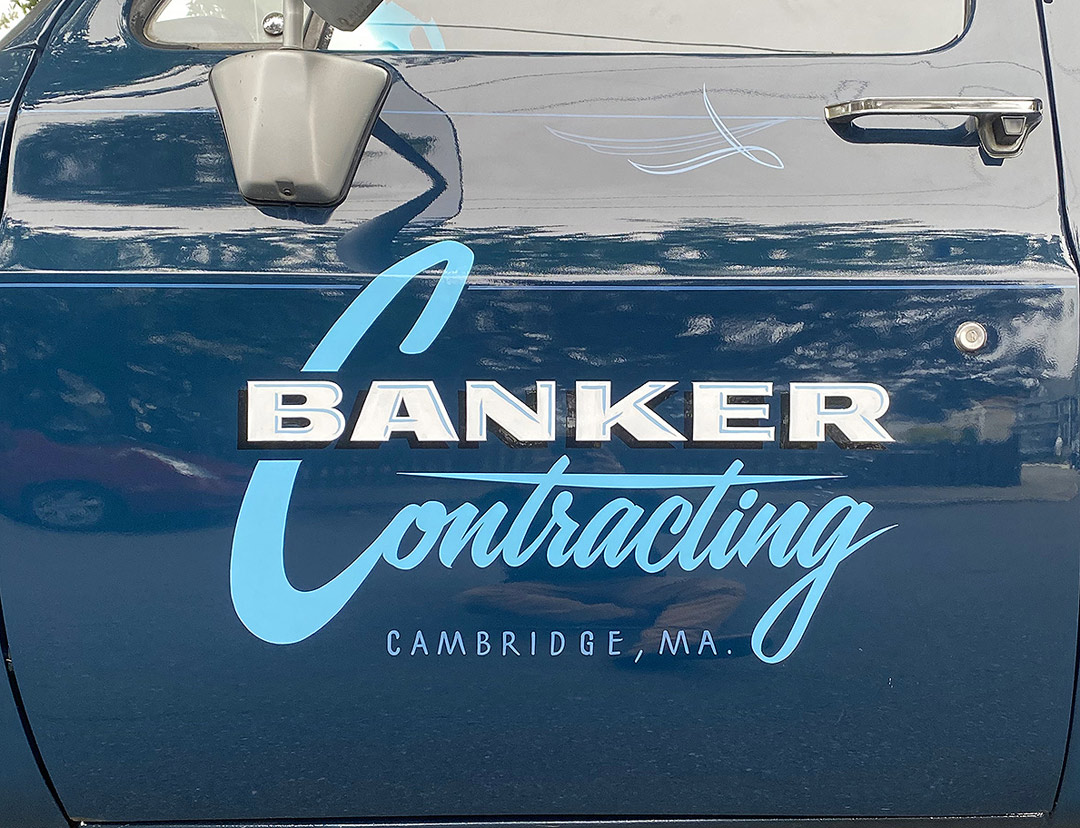
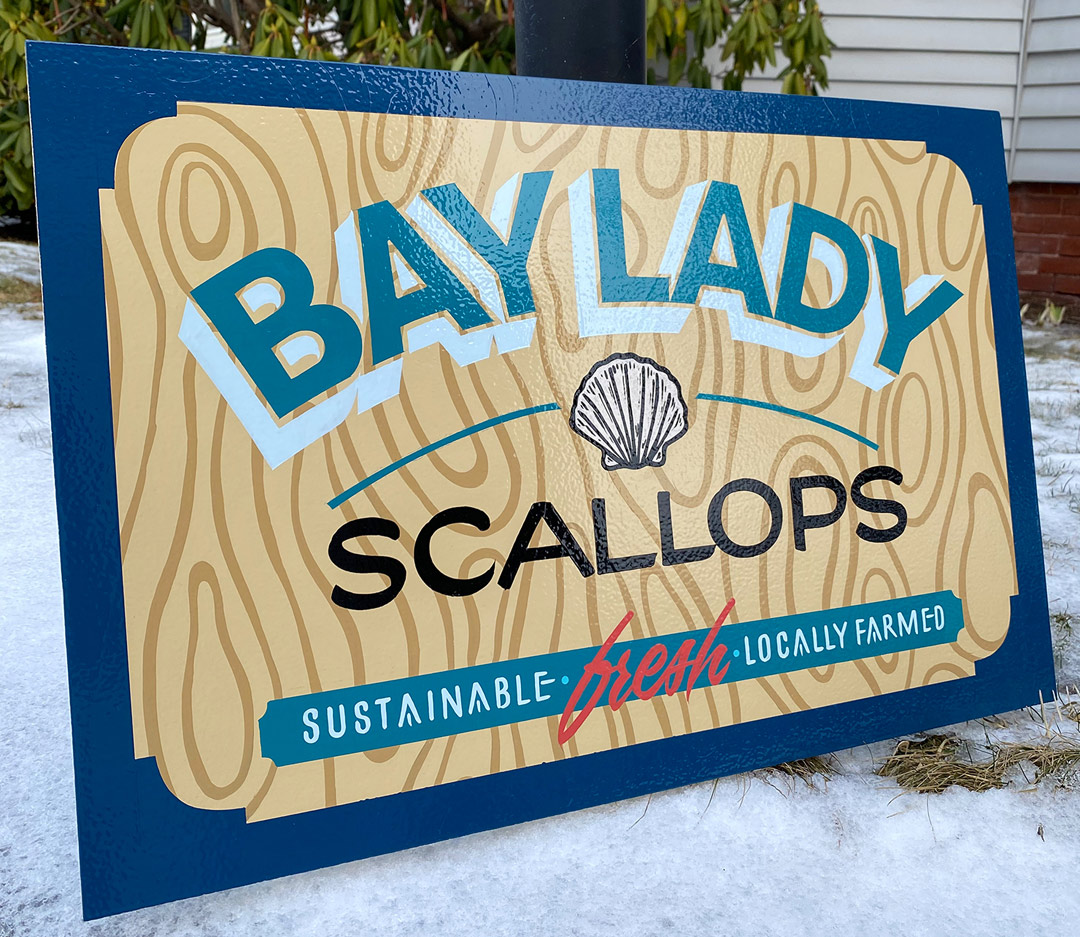
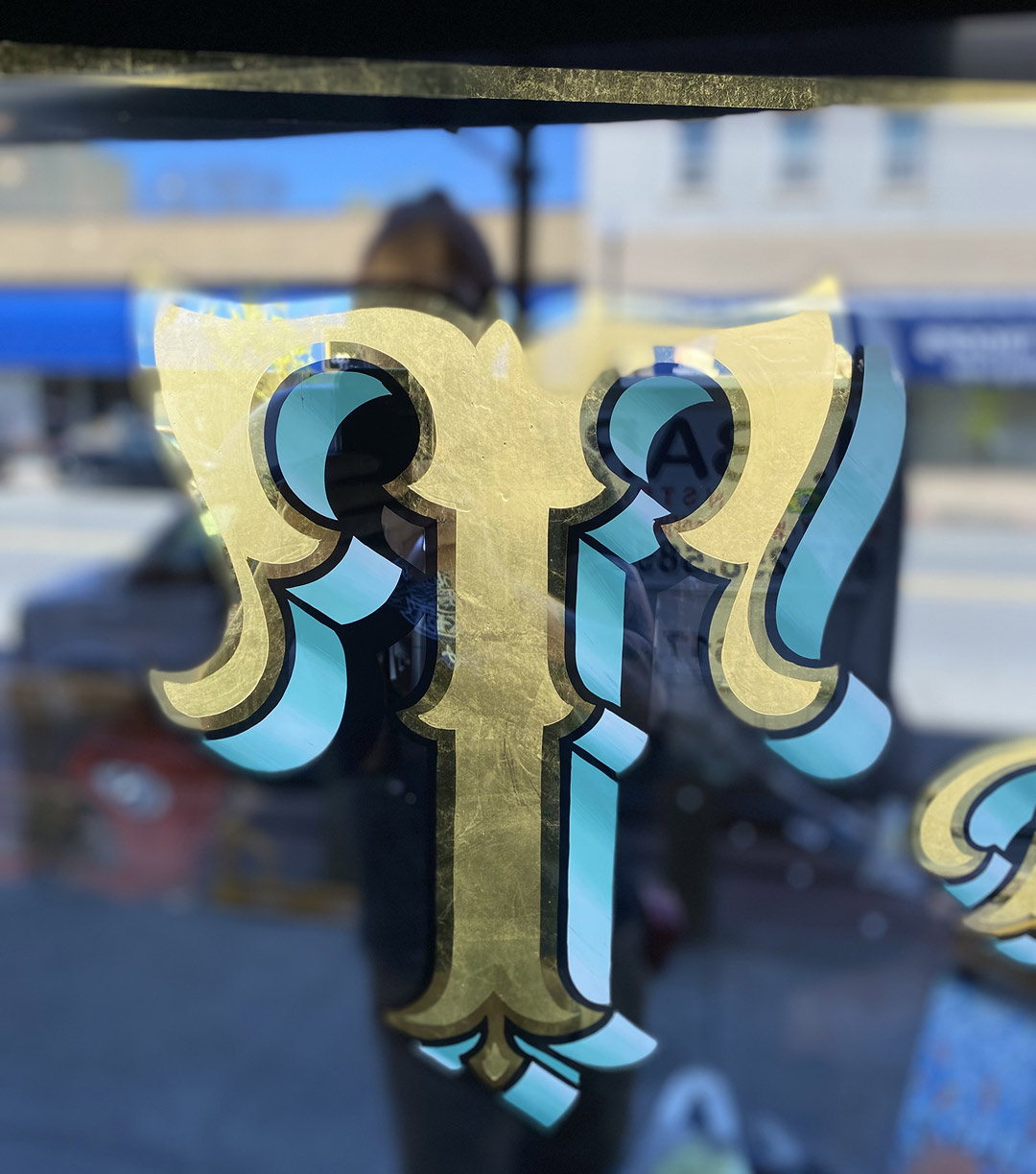
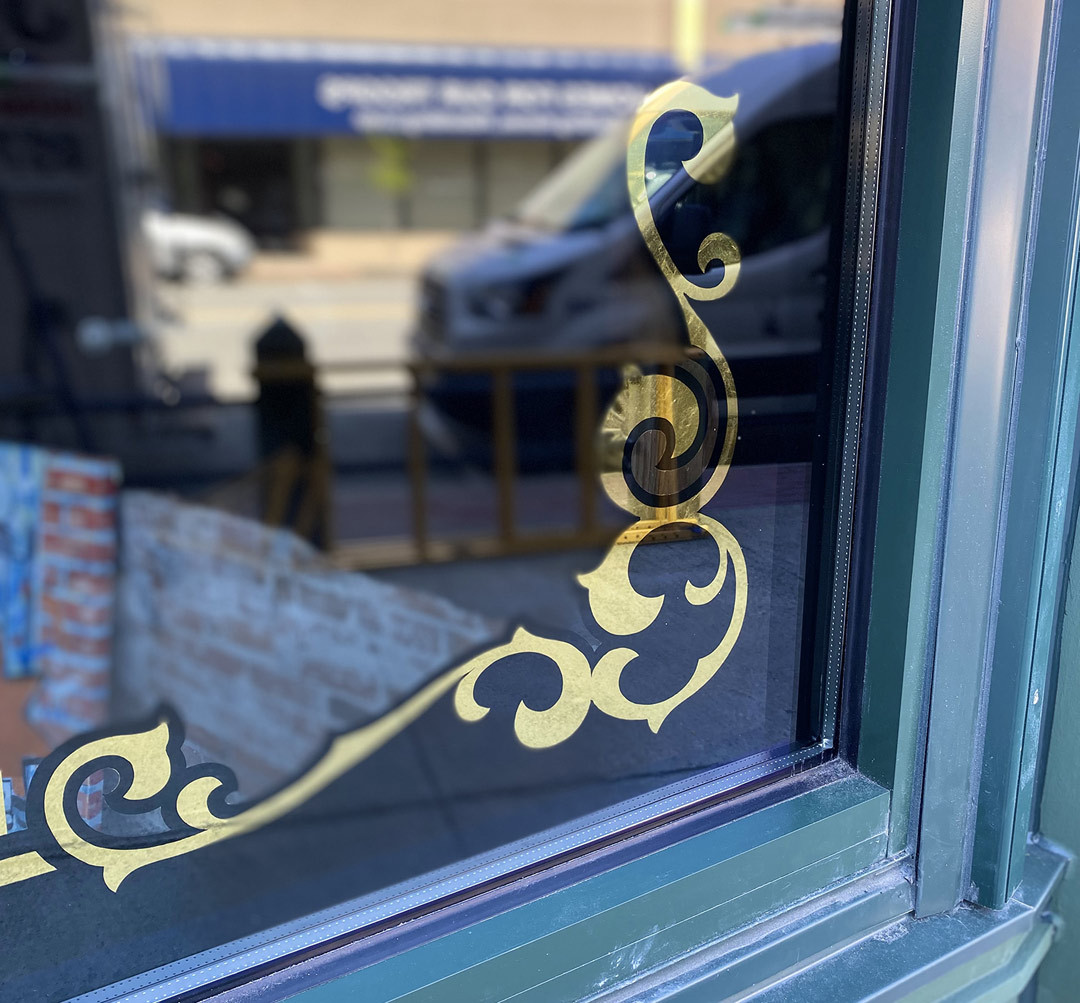
“I’m getting some interest from small contractors and artisans who value hand-lettered signs because they’re into craftsmanship. I’m doing a sign for a vintage clothing shop now, and I recently did a gold leaf window for a jewelry store down along Boston’s Newberry Street, which is a very cool area—and a good market for hand-lettered signs.”
Last year, Sam started offering weekend hand lettering workshops at the request of a few people. It went well—the attendees learned a lot about both lettering and layout, and had a good time doing it. Sam has been doing the workshops ever since, about once per quarter.
Those who have come to the workshops have varying levels of experience and interest. A few have been lettering for a year or two. Some are hobbyists and sign enthusiasts who love to paint and do it just for fun. Others are tattoo artists or others who just have a casual interest and want to try their hand at it.
“I love helping people learn the craft and seeing them progress,” Sam says. “I enjoy being with people who have an interest in sign painting. I love passing along what I know and encouraging people to get where they want to go. I want to help keep sign painting alive. It’s been a lot of fun.
“In the advertising business, I was managing teams of people and working with multiple designers and art directors—lots of creative people. I miss that. As a sign painter, you’re kind of a lone wolf. Most of us work alone. So doing the workshops fills some of that need for me.
“Matt Forino, who has apprenticed with me for the past couple of years, and I do the workshops together and we work very closely with the attendees. It’s intense—we work hard and we have a lot of fun, too.
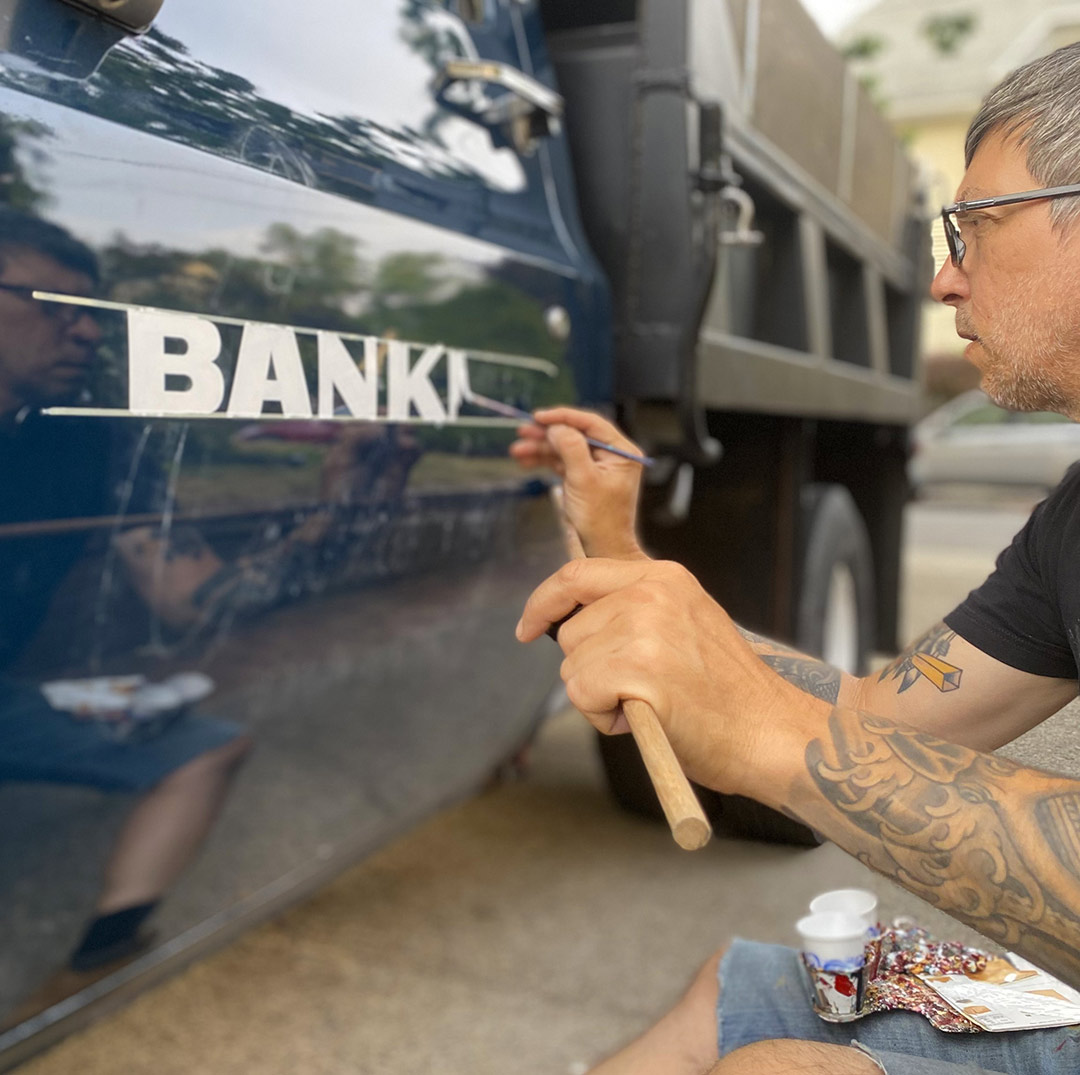
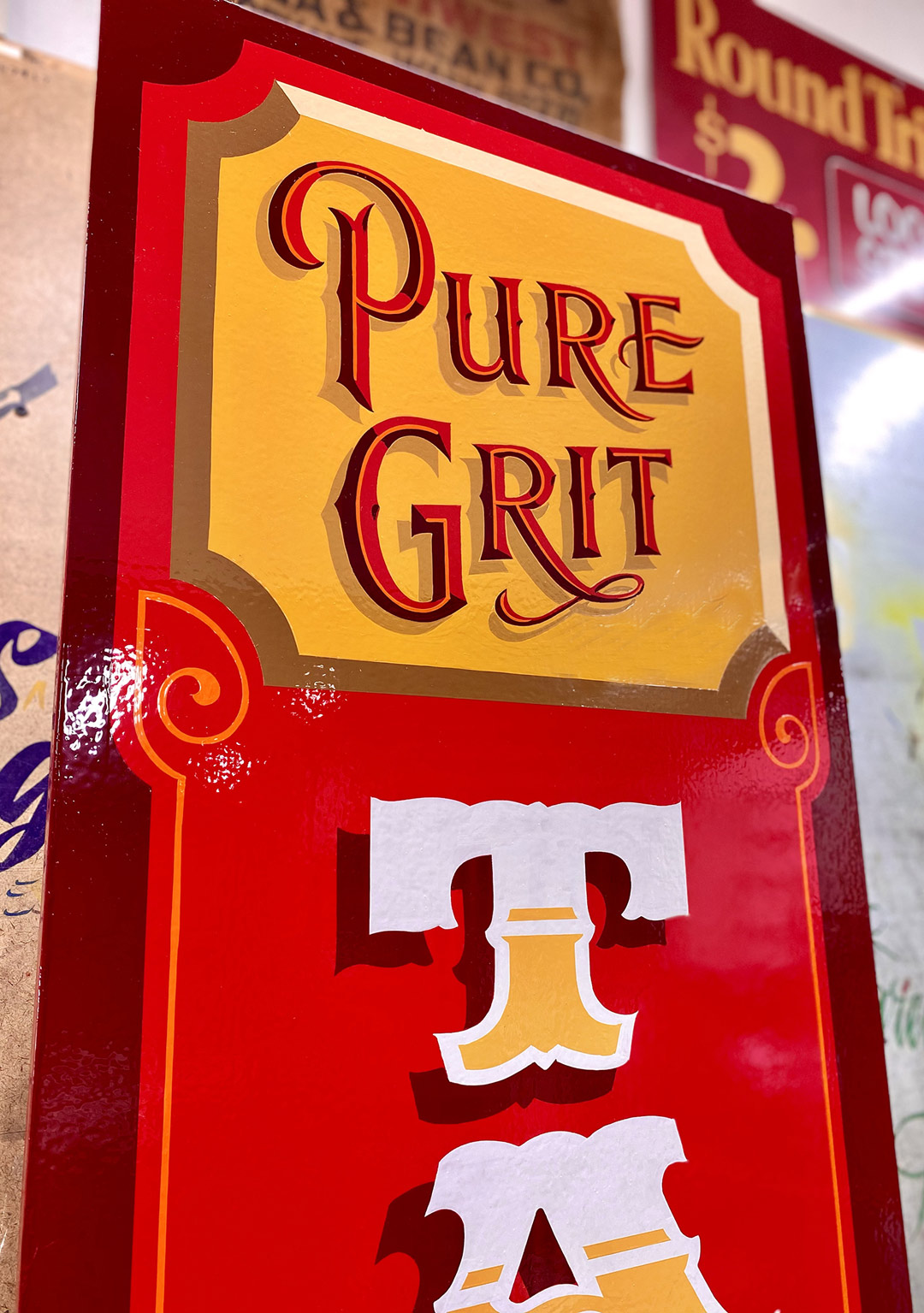
“For me, sign painting is a lifelong journey. It takes a long, long time to get proficient—first at lettering skills and second at developing design skills. I think it’s important for newcomers to work hard at putting all those things together—not just the block and casual lettering, but the whole sign, as a designed object, from top to bottom.”
Sam attended the Letterheads 50th anniversary in Cincinnati this year. “It makes me so happy to see all the young people entering this trade now. I wouldn’t have thought it possible 10 or 15 years ago. And they all have the appreciation of the history of it, too—and reverence for all the old pros and methods. That gives me hope for the future of sign painting.”