
By signcraft
Posted on Sunday, May 3rd, 2026

Engine turning, or burling, gold leaf, is a popular traditional technique for enhancing surface, gold leaf, particularly on vehicles. It’s especially common on firetrucks. It was brought back to the USA from Europe by GI sign painters who saw the technique in Europe during World War II. Before that time, nearly all surface gilding in the US had a plain burnish. (If you see engine turning on fire apparatus made before World War II, it’s the result of a restoration that’s not authentic.)
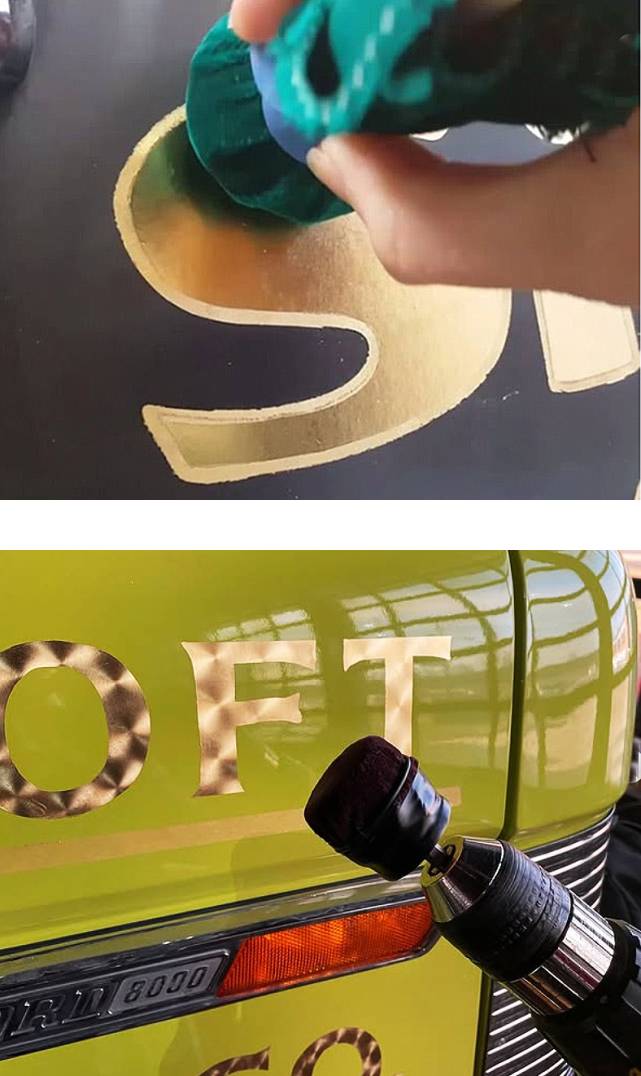 Burling gold leaf is essentially finely scratching the surface of the gild in a circular pattern by pressing a soft pad into the gold and rotating it. That circular pattern causes the gild to reflect light from almost all angles. The pad is often made by wrapping velvet around a wad of cotton, though there are tools made specifically for this purpose. Some can be mounted in an electric drill to speed the process.
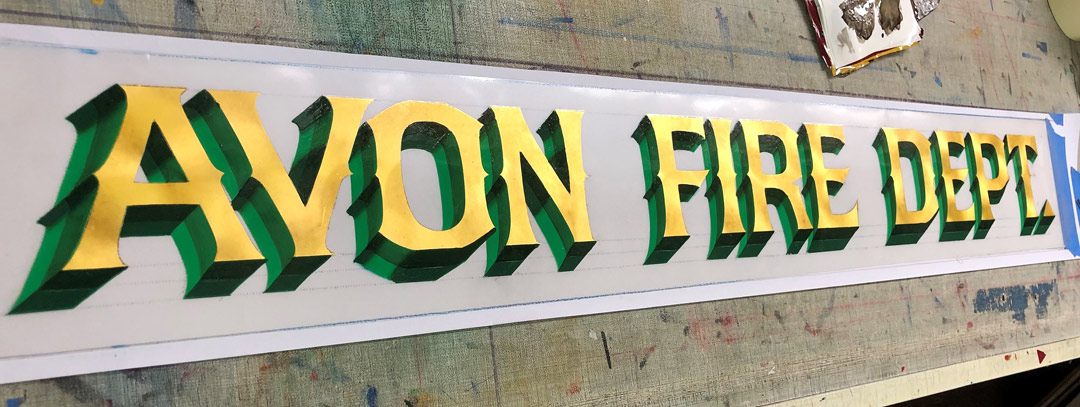
Usually you plainly see the center of each rotation of the pad in the gild as you can see in the photo at left.. But Bob Whelan of Valatie, New York, developed a technique for burling gold leaf that gives a different look. Now 91, Bob has specialized in gold leaf lettering on fire trucks for most of his life, and his work is well known both by sign makers and fire companies across the Northeast. Many area sign painters call this effect the “Whelan Burl.”
“It’s something I started doing years ago,” Bob says, “because I didn’t like the look that you get when you engine turn a wide stripe—say 1/2-in wide or more—on a fire truck. When you line up the center of each burl with the center of the stripe, you get an annoying effect that makes it look like chain or something.
“Instead, I place the center of the pad that I use for burling just outside the gold leaf stripe. That way only the outer portion of the pad contacts the stripe. You get the burled effect without the centermost swirl of the pad. The closer you come to the edge of the stripe with the center of the pad, the better it looks.
“For the next burl, I move to the opposite edge of the stripe. The two burls just barely touch each other. The result is a very pleasing look. I don’t measure the distance between the burls—I just go by what looks good. I don’t want it to look like it was done by machine.”
Bob originally thought his technique would be faster and easier—which it is—but he found it is appealing because it lets you notice the lettering and stripes first, rather than your eye being drawn to all the circles created by the pad.
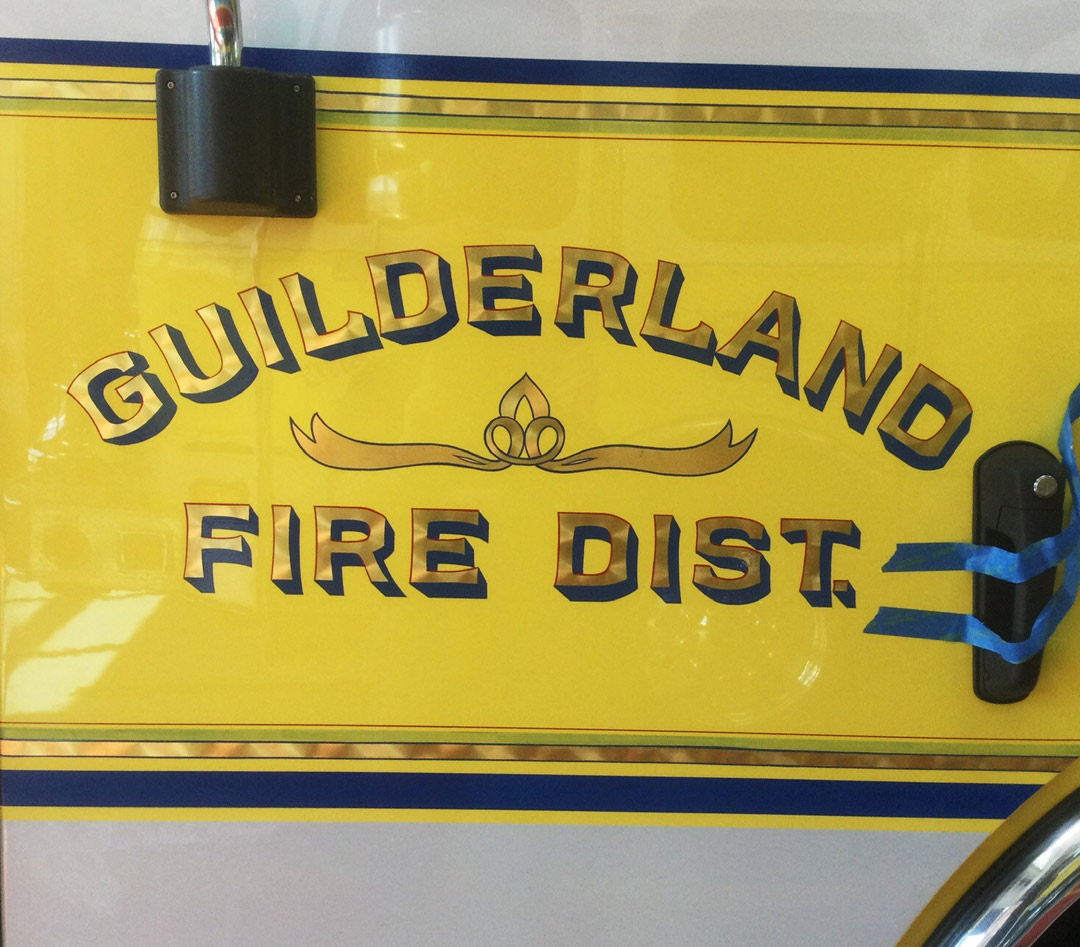
Jim Fetten and Bob Whelan worked together on this truck.
“Those circles can be distracting,” he says. “This effect is softer but still adds a lot to the gold. It also catches the light from all directions, which makes the gold be more visible. Plain surface gilding can appear almost black from some directions, and this prevents that.
“You can vary the size of your pad to get a larger or smaller burl. I like to size it to the size of the stripe or lettering. I don’t want to use a small pad on large lettering—it just means more of those small swirls. Plus, if the pad is too small, it will slow you down.
“Everyone who does it gets a little different look, depending on how they do it. But no matter how it’s done, it still avoids the look of all those circles.”
Bob uses the same approach on gold leaf lettering. He places the center of the burl just outside the stroke of the letter rather than in the center of a stroke where it would be obvious. He especially avoids that in any script lettering because he finds that having the center of the burl in the stroke makes script lettering very busy looking.
“Bob’s burnish is really a big deal,” says Jim Fetten, Fetten Sign Company, Jamesport, New York. “Some people have seen it in my work, but they don’t know where it comes from or who developed it. I learned it from Bob and it’s a beautiful effect on surface gold leaf. A lot of sign painters have picked it up from Bob.”
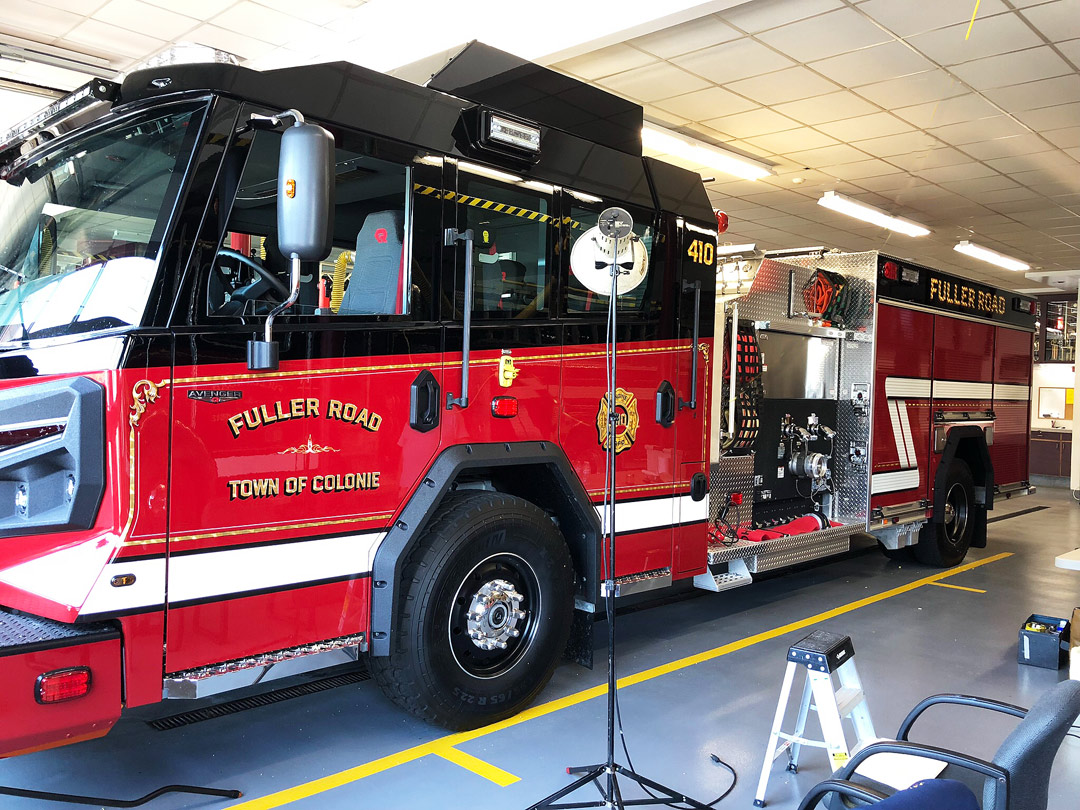
Another collaboration by Jim and Bob.
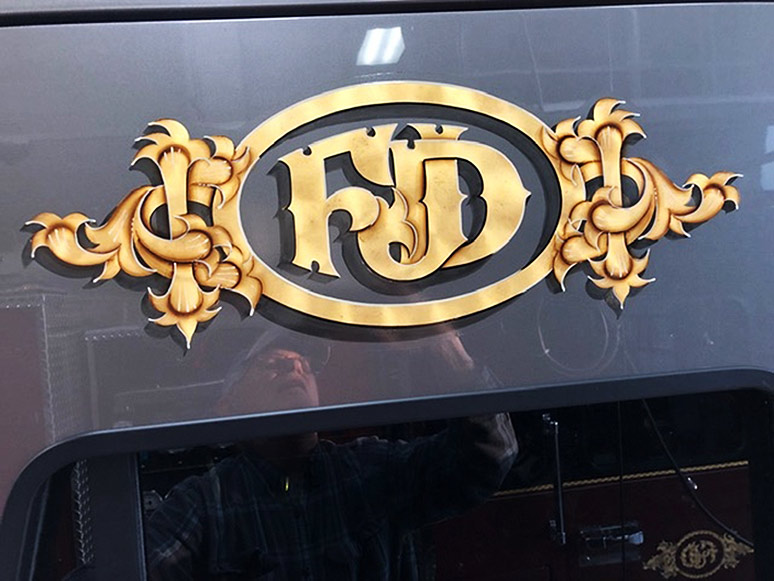
Both of the above jobs by Jim are good examples of the Whelan Burl at work.


